
Bus Stop Digital Signage: Real-Time Passenger Information Across Your Network
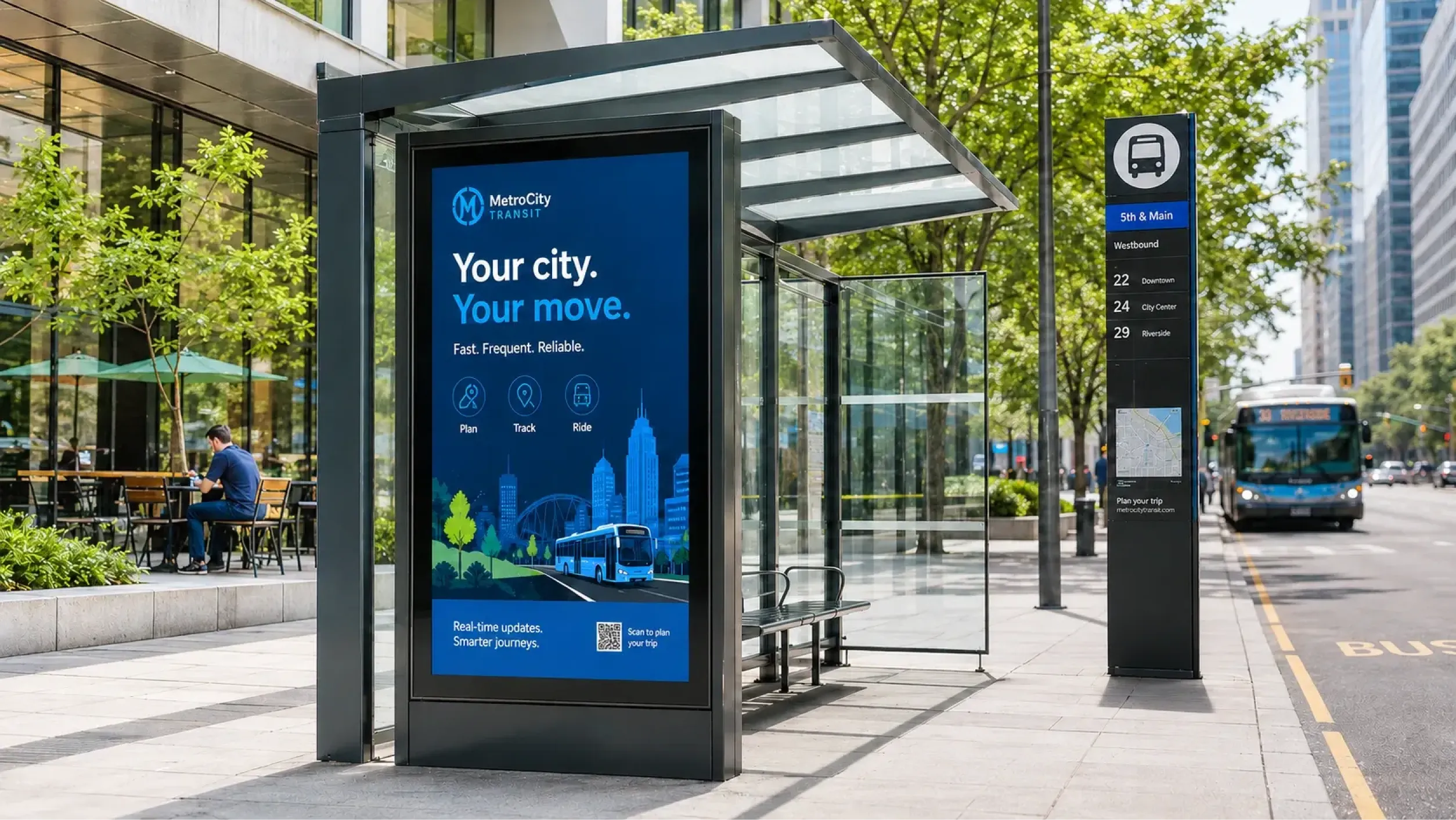
Connect AVLS and GPS to display live arrivals, route data, and emergency alerts. Run scheduled advertising alongside. Manage every screen in your network from a single cloud dashboard.NEC Corporation deployed Pickcel across 150 BRTS bus stations in Ahmedabad and Hubli-Dharwad, India.

Trusted by businesses worldwide






SOC 2 Type II
ISO Certified
What Is Bus Stop Digital Signage?
Bus stop digital signage is a network of digital displays installed at bus stops, BRT stations, and transit terminals to deliver real-time passenger information, service updates, and scheduled media content from a central cloud platform. This model builds on NEC's bus rapid transit passenger information system, deployed across 150 BRTS stations in India using the same AVLS-driven architecture. Pickcel's platform serves as both a content management system and a Passenger Information Display System (PIDS), giving transit operators remote control over every screen in their network from a single dashboard. Public transit authorities, BRTS operators, and city municipal corporations deploy the technology to reduce passenger uncertainty, broadcast emergency alerts instantly, and generate advertising revenue alongside operational information.
Why Static Displays No Longer Serve Modern Bus Networks
Real-Time Information Gap
Printed timetables and static boards reflect scheduled times, not actual vehicle positions. When a bus is delayed by traffic, diverted due to an incident, or pulled from service, passengers at the stop have no information. The gap between published schedule and operational reality is where passenger trust in a network erodes. Digital signage connected to AVLS closes that gap by updating arrival displays automatically as vehicle position data changes, with no manual input required from staff at any station.
Multi-Location Coordination
Managing content across dozens or hundreds of bus stops simultaneously requires centralised software control. Without it, a single service change cannot reach passengers across the network in real time, and response time to disruptions depends on the speed of the slowest manual update. Coordinating an emergency broadcast, a schedule change, or a service-wide announcement across a distributed physical network requires a single command-and-control layer. Without that layer, stops remain out of sync and staff time is absorbed by logistics rather than service delivery.
Passenger Experience Under-Investment
Bus stops are often the lowest-investment touchpoint in a transit network, despite being where passengers spend the most uncertain and anxious time in their journey. A poor information environment at the stop drives negative perception of the entire network, regardless of the quality of the vehicle fleet or the reliability of the services behind it. Investing in accurate, real-time on-screen information converts this weak point into a managed passenger experience that reflects the quality of the wider service.
What Bus Stop Digital Signage Can Do
Pickcel's bus stop digital signage platform gives transit operators direct control over passenger information, content scheduling, and network-wide broadcasting from a single cloud dashboard — combining AVLS integration, multi-lingual scheduling, and remote management in one system.
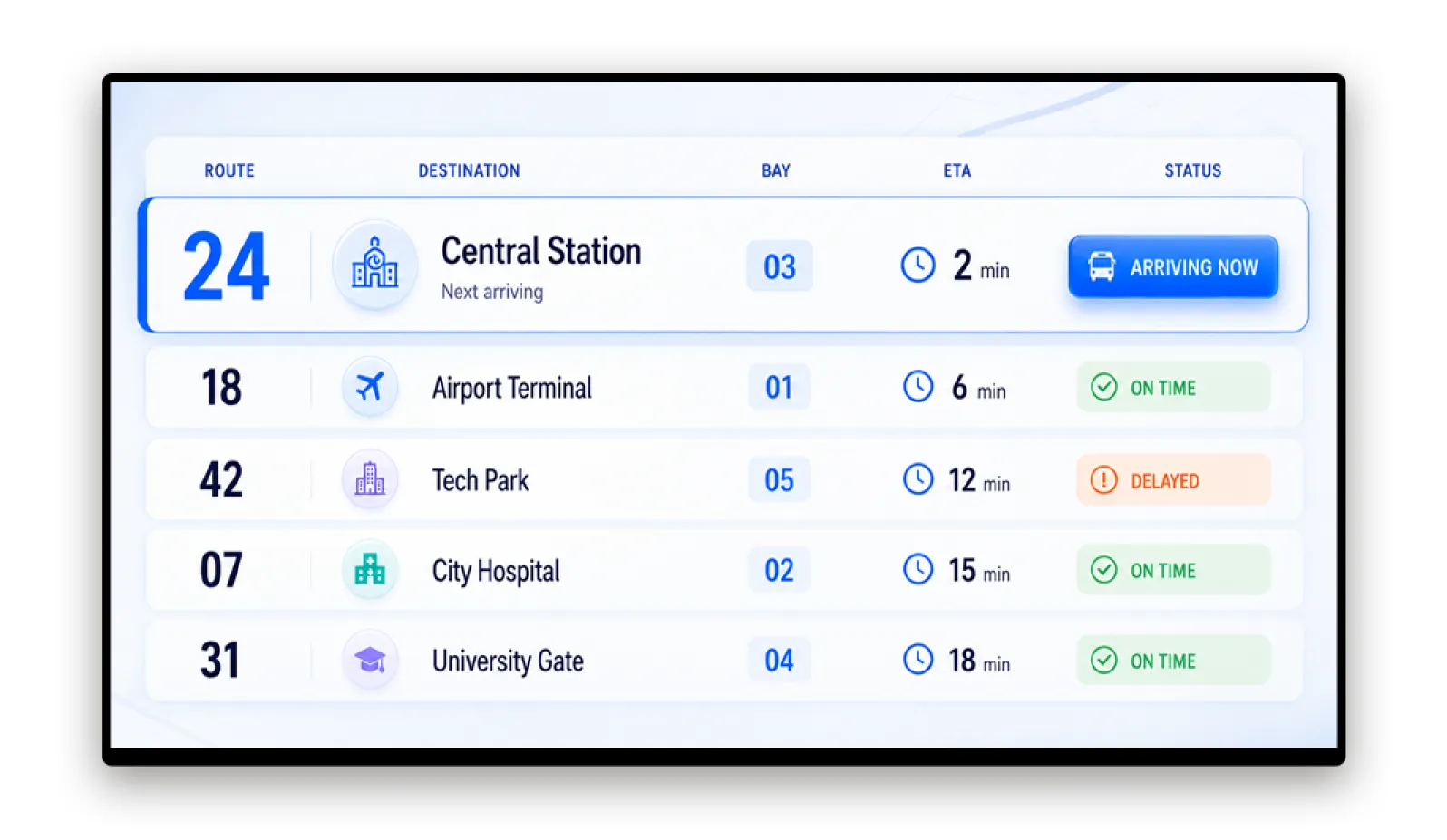
Real-Time Bus Arrivals
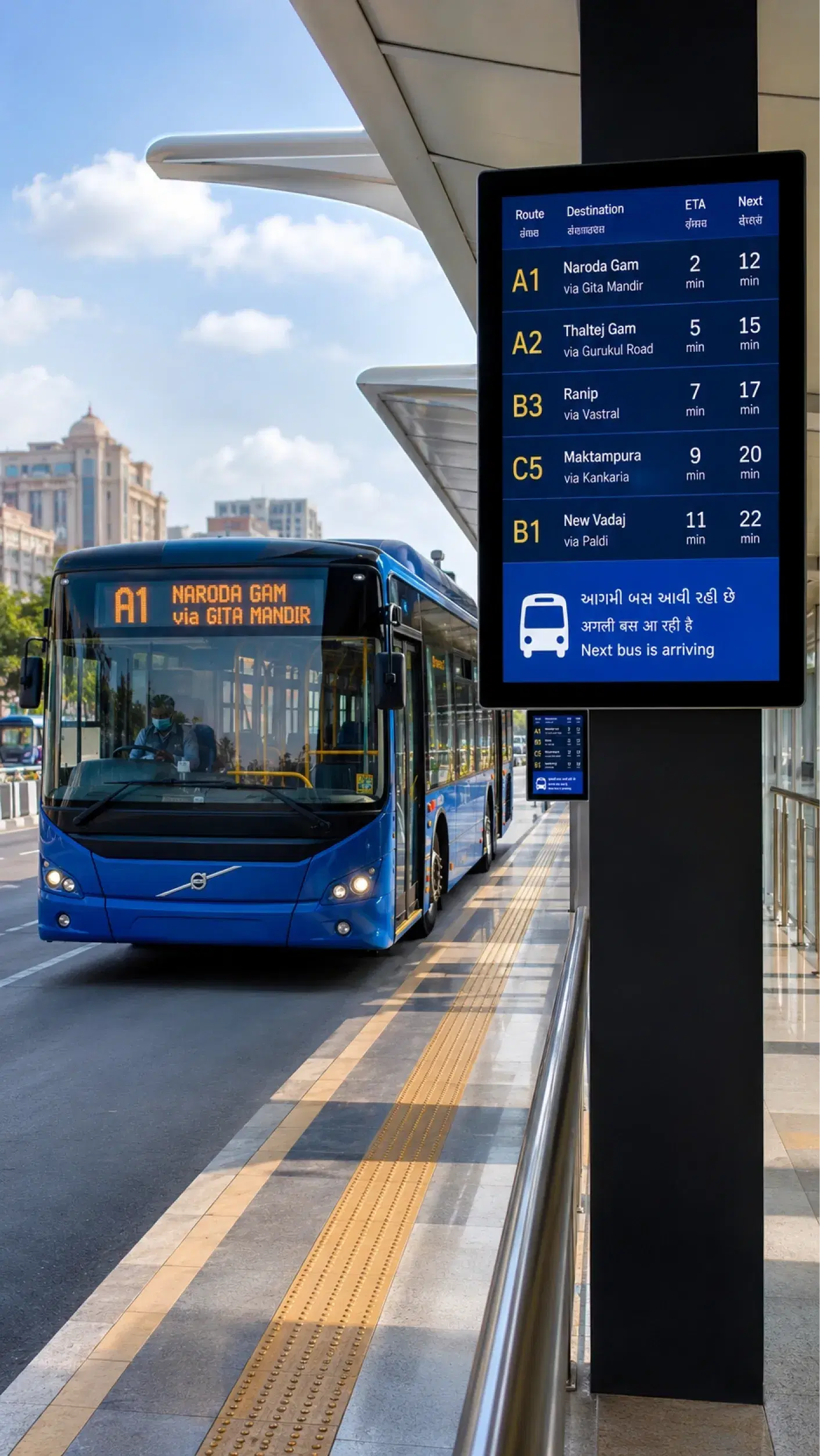
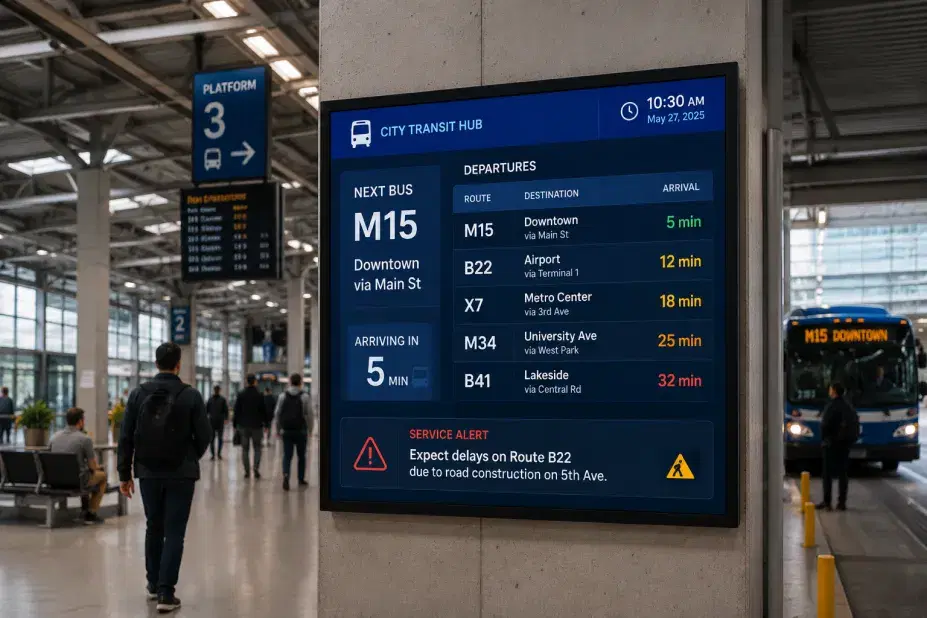
Connect to AVLS and GPS systems to display live estimated arrival times, route numbers, final destinations, and bus identifiers on every screen. Content updates automatically as vehicle positions change. No manual input required from control room staff at any stage.
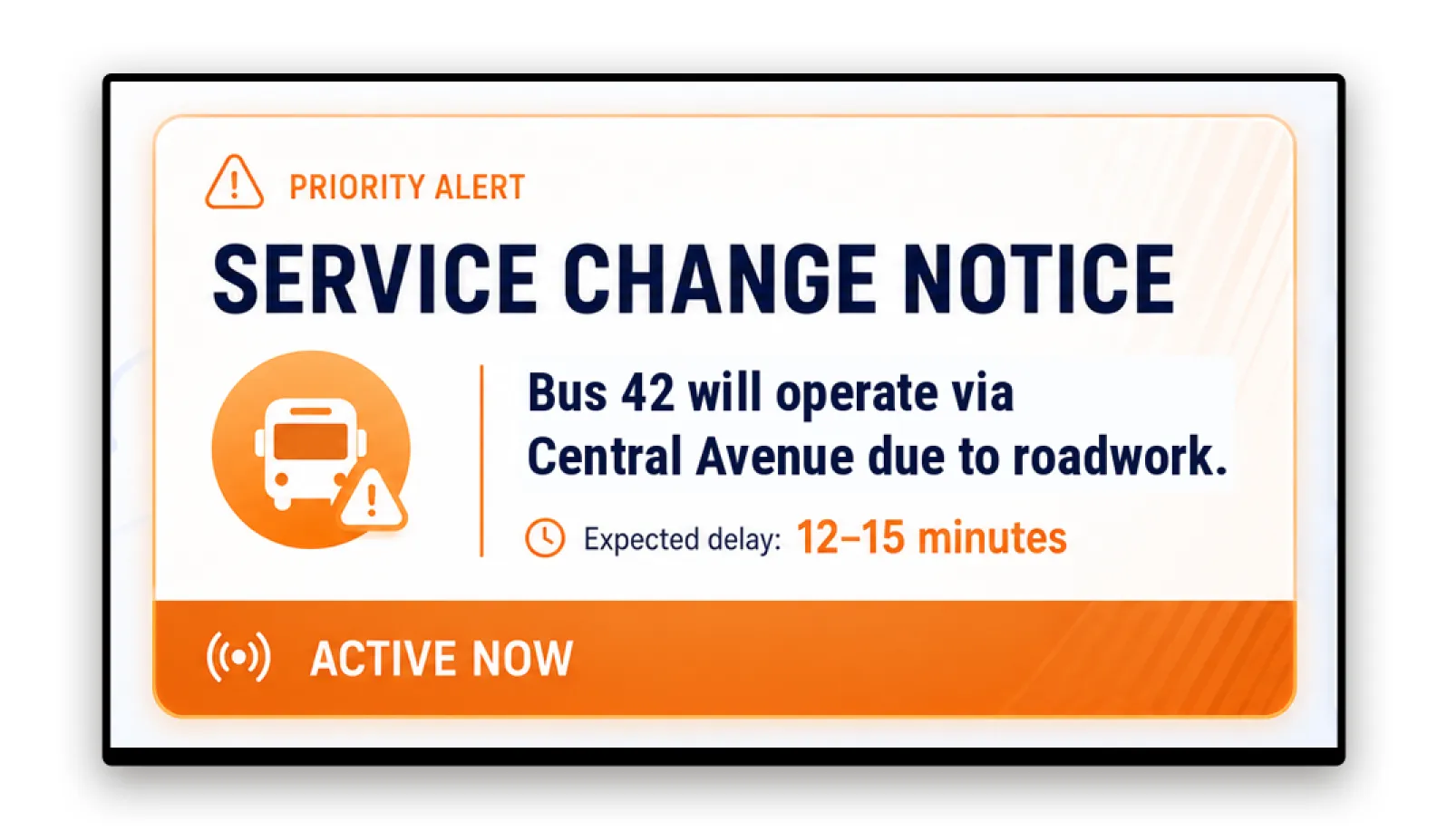
Passenger Announcements
Broadcast service changes, route diversions, policy updates, and facility information instantly across every screen in the network from a single CMS. Override scheduled content with priority messages in seconds, with a full broadcast audit trail retained in the platform.
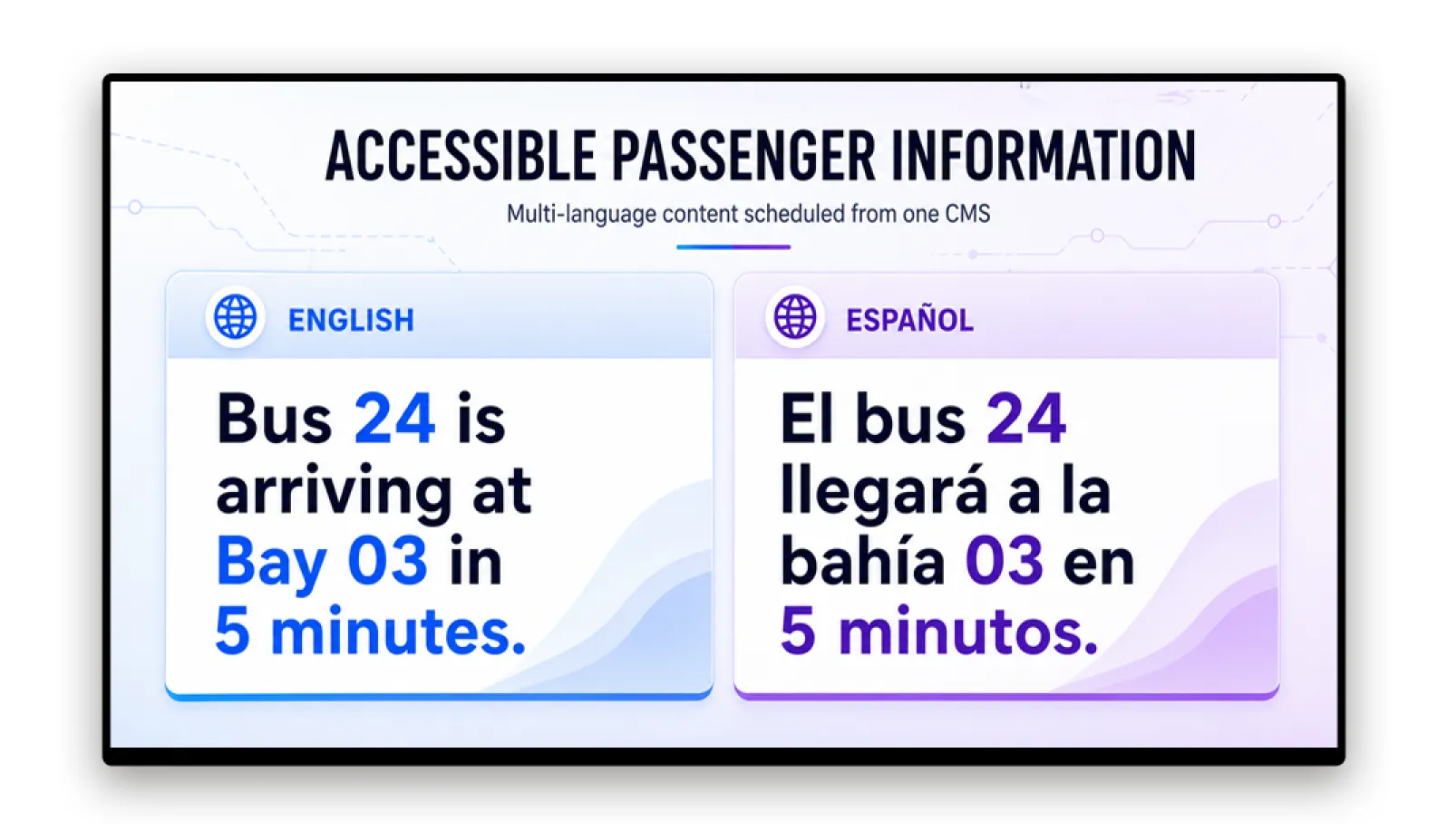
Accessibility and Multi-Lingual Content
Schedule content in multiple languages simultaneously. Serve linguistically diverse passenger populations across a bus corridor without maintaining separate content libraries or hardware configurations for each language group.
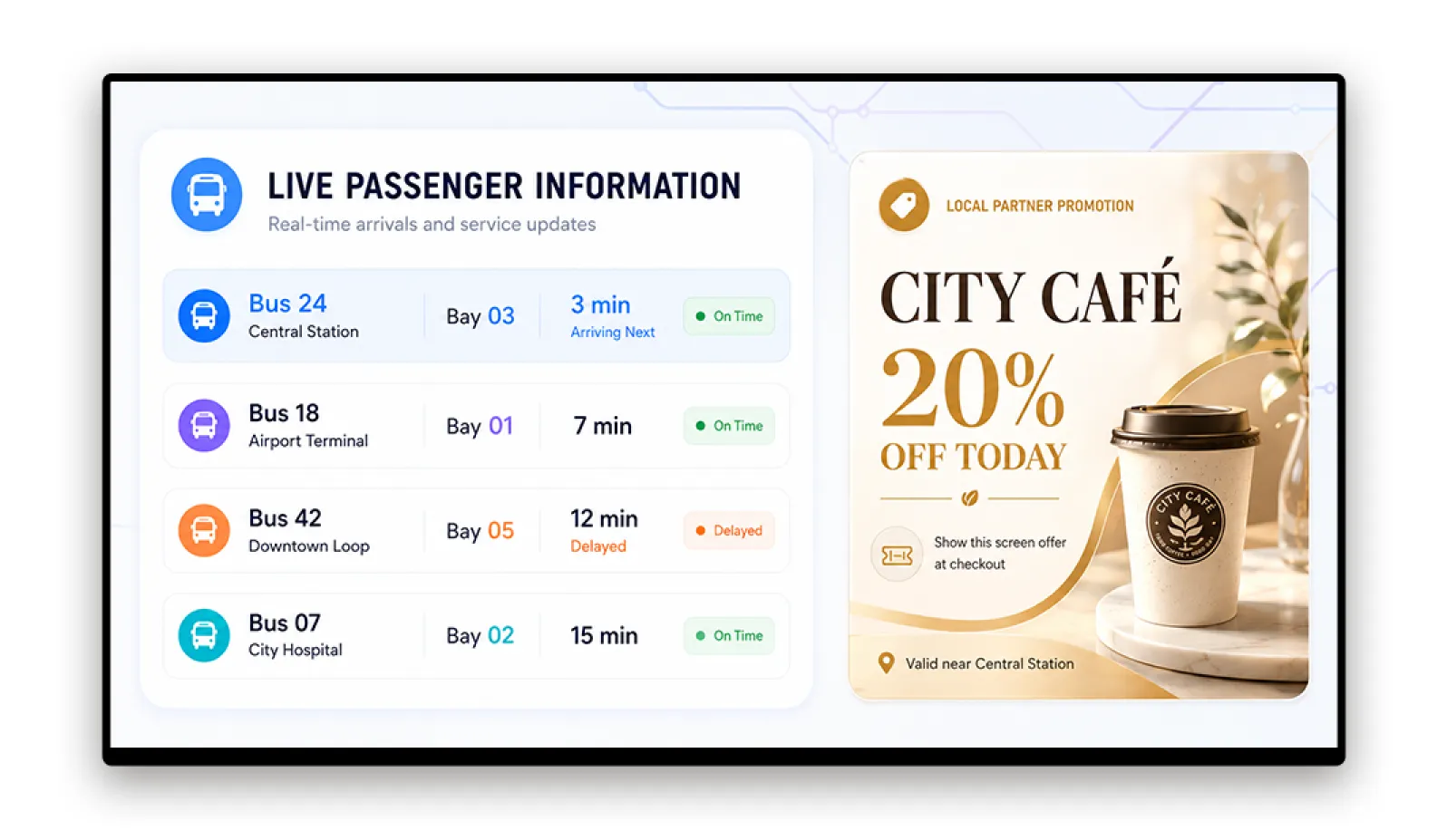
Advertising Revenue
Allocate defined screen zones for local business advertisements, event listings, and tourist promotions. Run advertising content alongside passenger information without zone conflicts or content delays. Transit operators can generate revenue from passenger dwell time at no additional hardware cost.
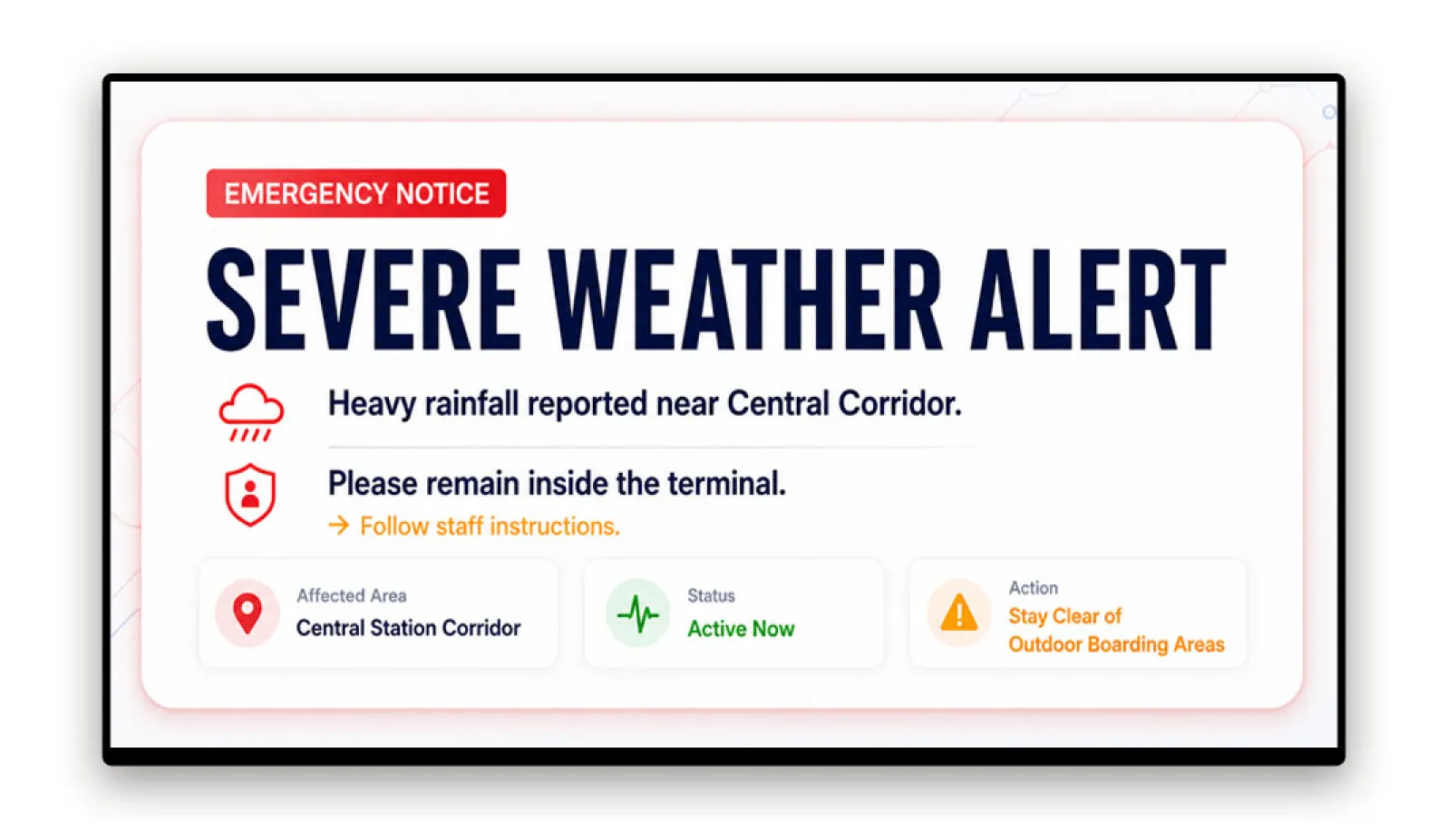
Safety and Emergency Alerts
Push emergency notifications, weather alerts, and safety messages to every screen in the network instantly. Priority broadcast overrides all scheduled content system-wide, ensuring passengers receive critical information at the moment it is issued.
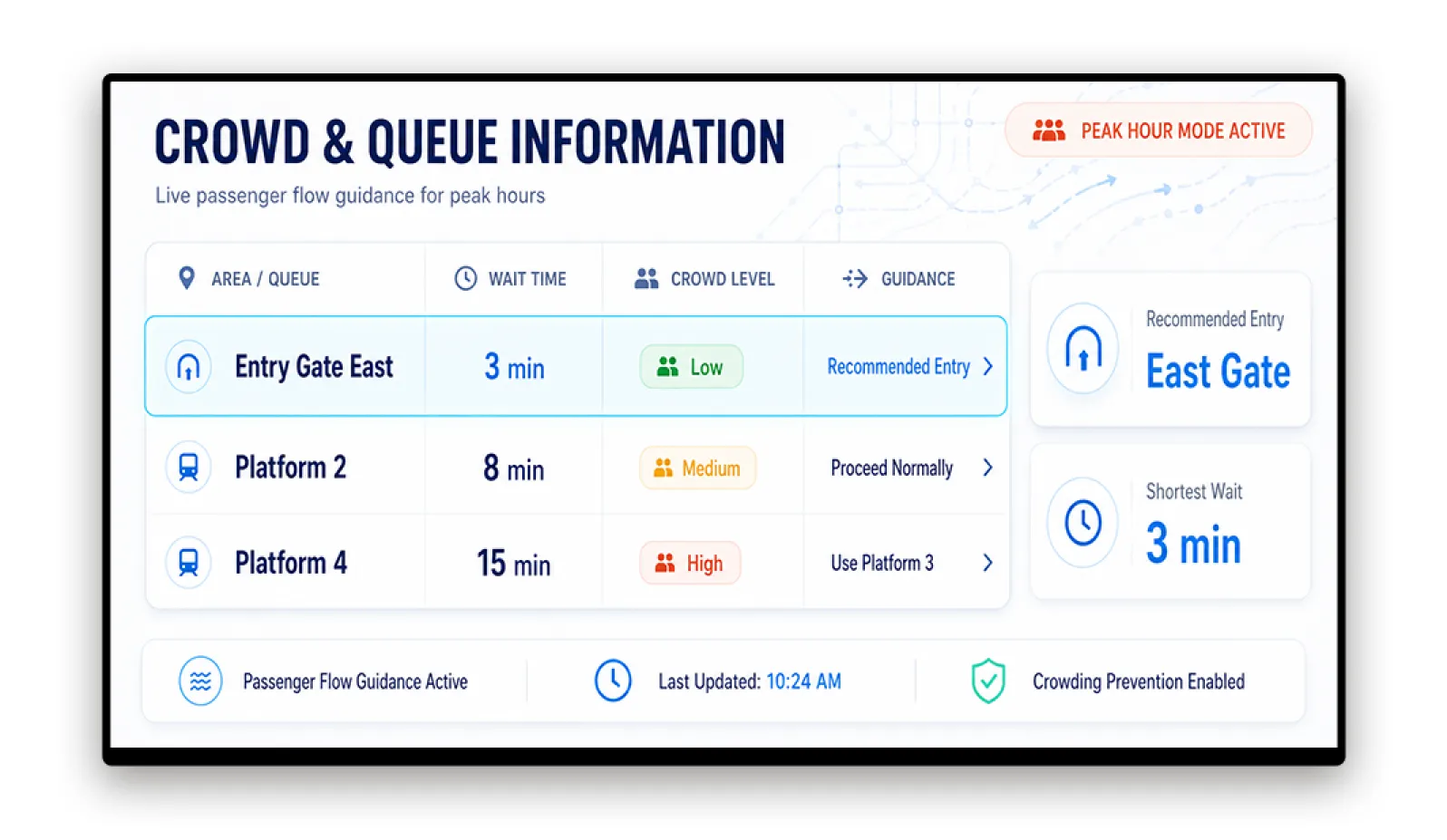
Crowd Management and Queue Information
Display ticketing queue data, platform load indicators, and wait time guidance at high-traffic stops. Distribute passenger flow across platforms and entry points during peak hours using screen-driven information before crowding develops.
Pickcel as a Passenger Information Display System (PIDS)
Pickcel operates as a full Passenger Information Display System for bus networks by connecting directly to AVLS data feeds via GPS. This same real-time passenger information displays approach powers Pickcel's dedicated PIDS platform across rail and airport deployments as well.
The NEC BRTS deployment in India achieved a maximum latency of 2 seconds between vehicle position update and screen display across 150 stations in two cities. This figure reflects the end-to-end performance of that specific implementation. Confirm with the product team for latency specifications applicable to your deployment architecture and AVLS infrastructure.
The remote admin module gives operators a live health view of every screen in the network. Automated alerts flag display failures, connectivity drops, and content scheduling errors before they reach the passenger-facing stage. Physical site visits for routine monitoring become the exception rather than the standard operational process.
For transit authorities evaluating a complete PIDS deployment, detailed capability information is available on the dedicated solution page: Passenger Information Display System Software.
2 sec
Max AVLS-to-screen latency (NEC BRTS deployment)
NEC deployment-specific. Confirm with product team for your architecture.
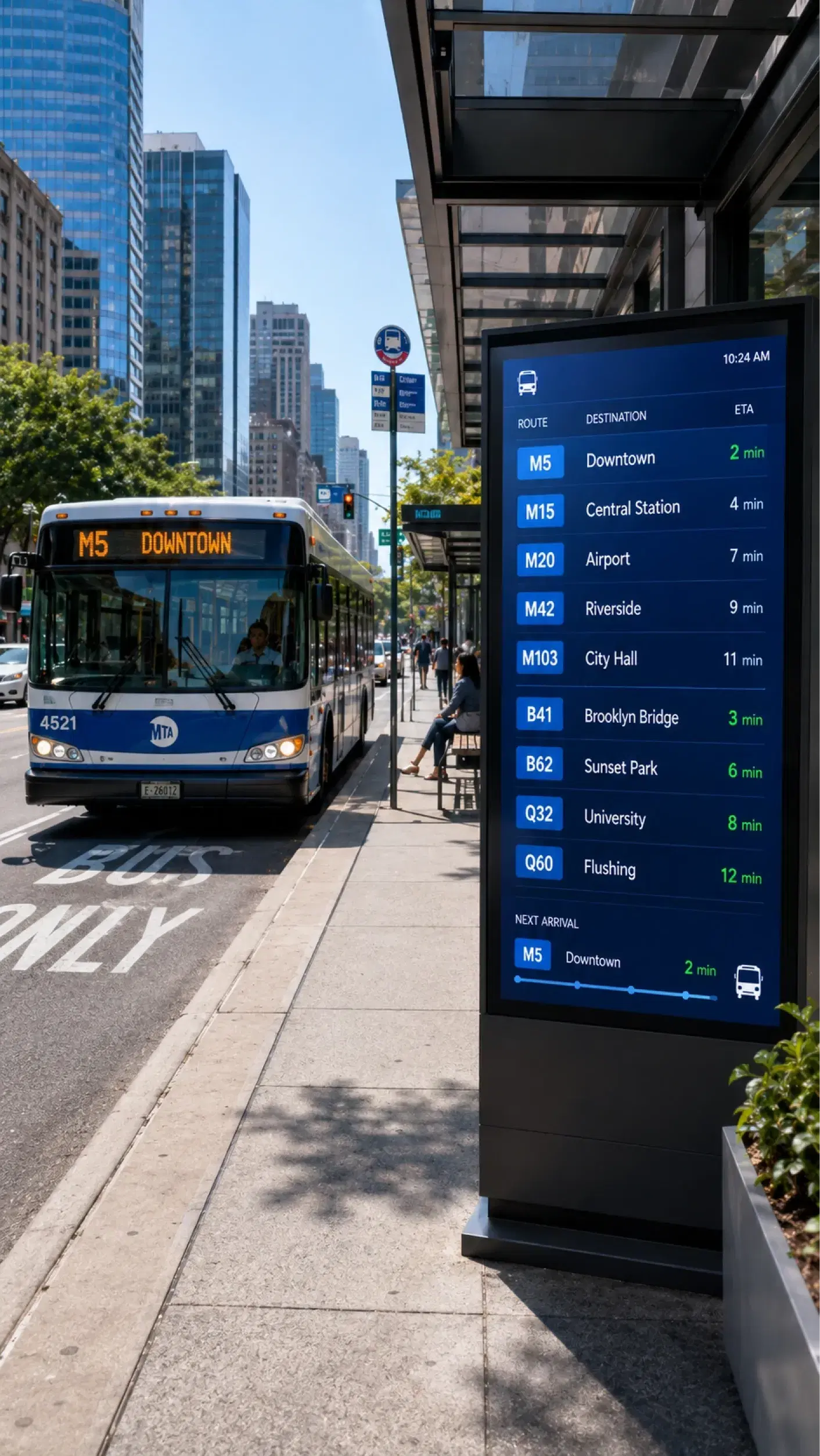
Pickcel in Transit: NEC BRTS India
Bus / Public Transit
NEC's Bus Rapid Transit Network in India
The Challenge
NEC Corporation (Nippon Electric Company), ranked #450 in the Fortune Global 500 (2020), selected Pickcel to power the Intelligent Passenger Information System across 150 BRTS bus stations in two Indian cities: Ahmedabad in Gujarat and Hubli-Dharwad in Karnataka, as part of India's national smart city initiative.
The Outcome
The deployment integrated Pickcel's platform with NEC's existing Automatic Vehicle Location System (AVLS) using GPS data. Every station screen displayed live estimated arrival times, bus route numbers, final destinations, door numbers, and emergency messages in three languages, all scheduled from a single cloud CMS.
Platform Capabilities for Bus Networks
Pickcel's cloud-based digital signage platform is purpose-built for transit network deployments, combining AVLS integration, remote content management, and multi-lingual scheduling capabilities across all screen types in a single cloud CMS.
AVLS and GPS Integration
Direct connection to vehicle tracking infrastructure delivers live position data to on-screen fields without manual updates. Operators configure which data fields appear on which screens; the platform handles the feed continuously.
Multi-Zone Screen Layout
A single display can show arrival times, advertising, and emergency alerts in separate zones at the same time without layout conflicts or content queuing delays. Zone boundaries are configured in the CMS and enforced at playback.
Remote Content Management
All screens in the network are managed from a cloud CMS. Schedule content by individual stop, by route, or across the full network. Update content instantly from any location with internet access, without deploying technicians to site.
Multi-Lingual Content Scheduling
Define language output per screen zone. Schedule language alternation automatically by time of day or zone. No separate content libraries required for each language; all translations are managed within a single content set.
50+ Device Compatibility
Deploy on commercial displays, outdoor-rated screens, and kiosk hardware across a wide range of manufacturers. Pickcel runs on Android, Windows, and ChromeOS-based devices. No proprietary hardware is required, and existing display infrastructure can be retained where it meets the deployment specification.
Automated System Health Monitoring
The platform monitors display status, connectivity, and content delivery across every screen in the network. Operators receive automated alerts when failures are detected, before passengers encounter a blank or frozen screen. Maintenance dispatch becomes targeted rather than routine.
Enterprise-Grade Security for Public Infrastructure
ISO 27001
Information Security Management
SOC 2 Type II
Security, Availability, Confidentiality
Role-based access control (RBAC) separates permissions by function across the platform. Content managers, network administrators, and regional operators access only the screens and configuration settings assigned to their role. For BRTS networks operating across municipal or state boundaries with multiple operators involved, this prevents unauthorised content changes and maintains a clear accountability structure across the full deployment.
Both certifications meet the documentation requirements common in government tender processes and system integrator procurement engagements.
More Digital Signage Solutions for Transit
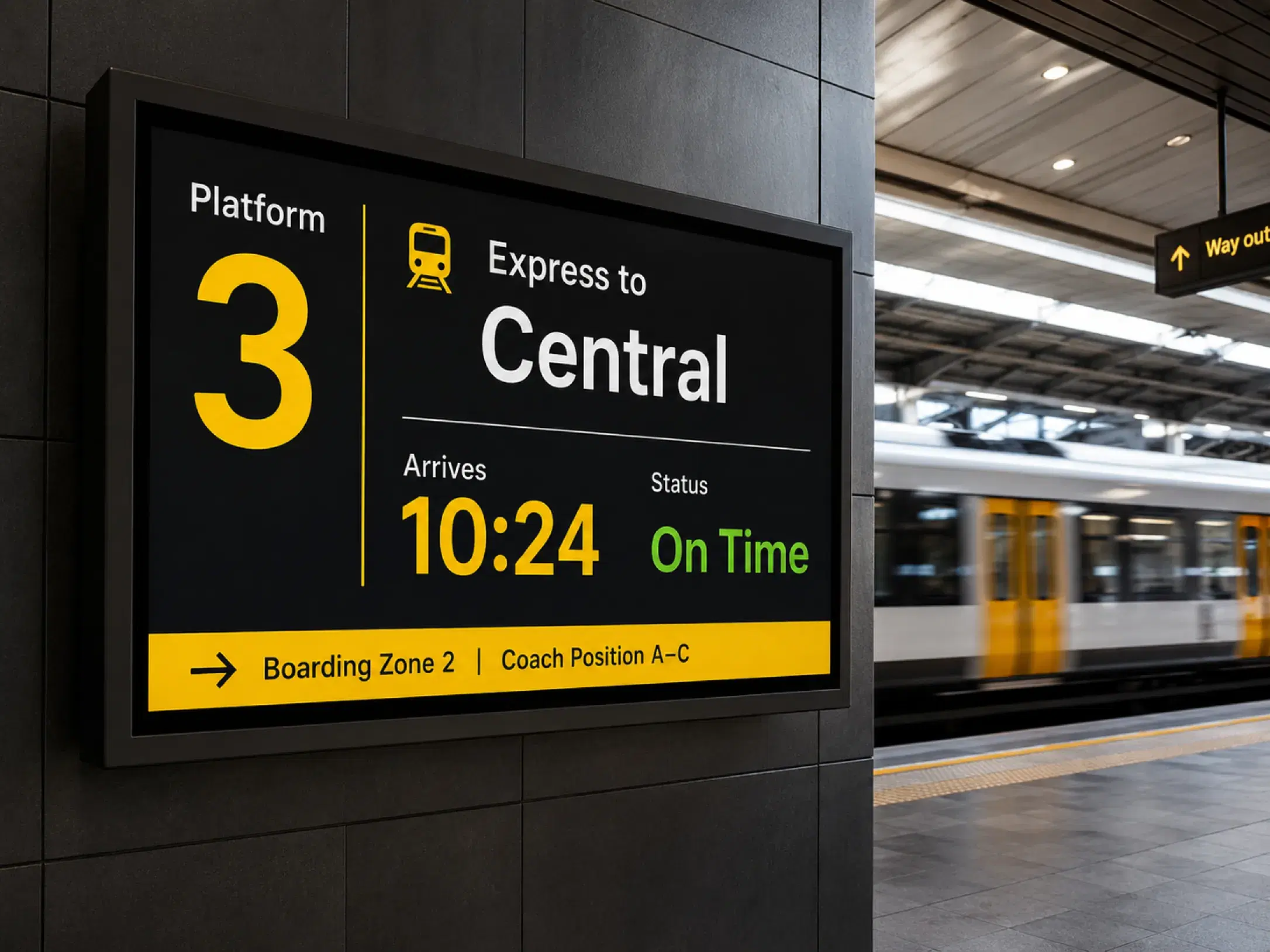
Train Station Digital Signage
Passenger info and advertising for rail networks
Explore →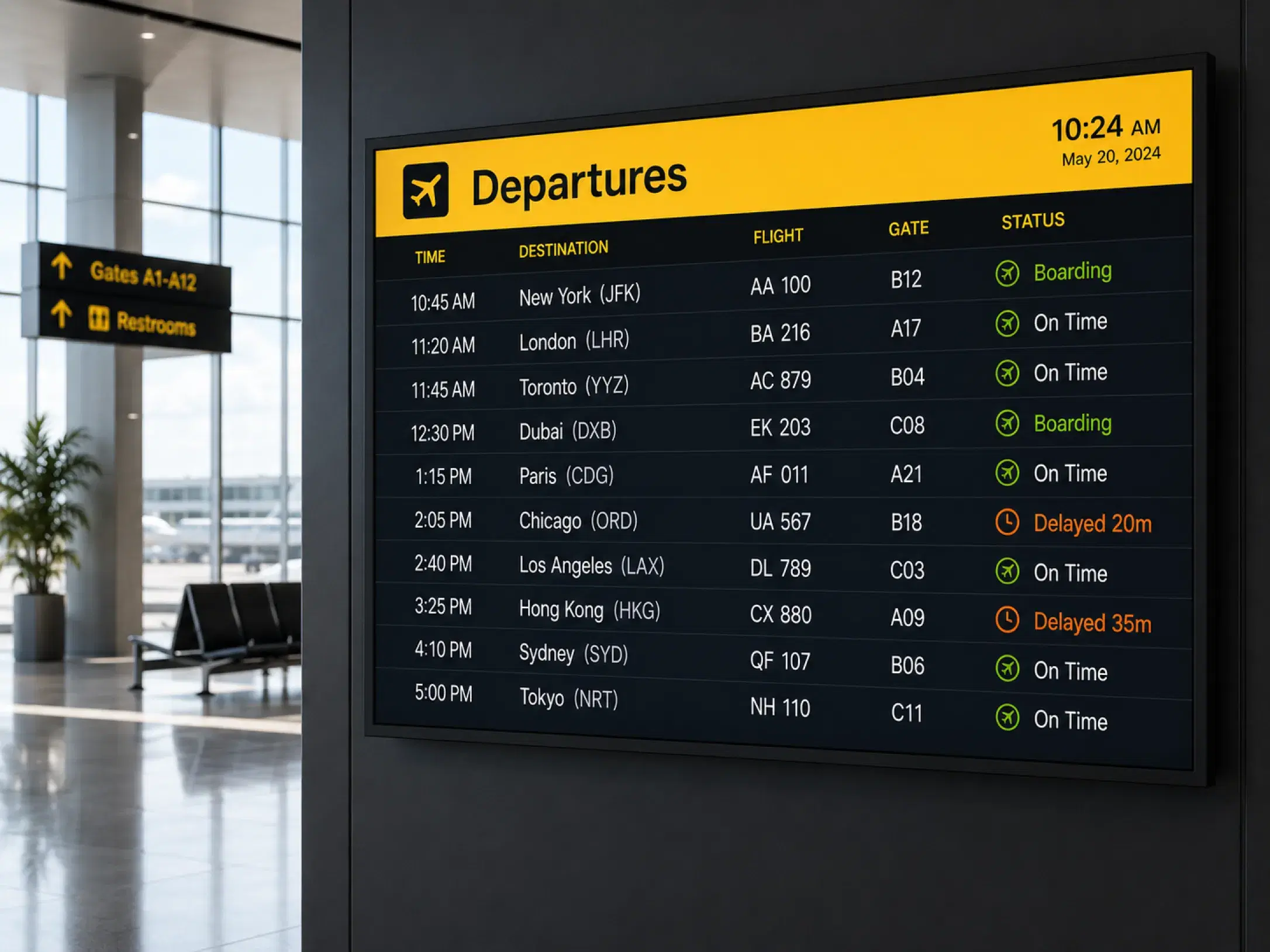
Airport Digital Signage
FIDS, wayfinding, and retail for airports
Explore →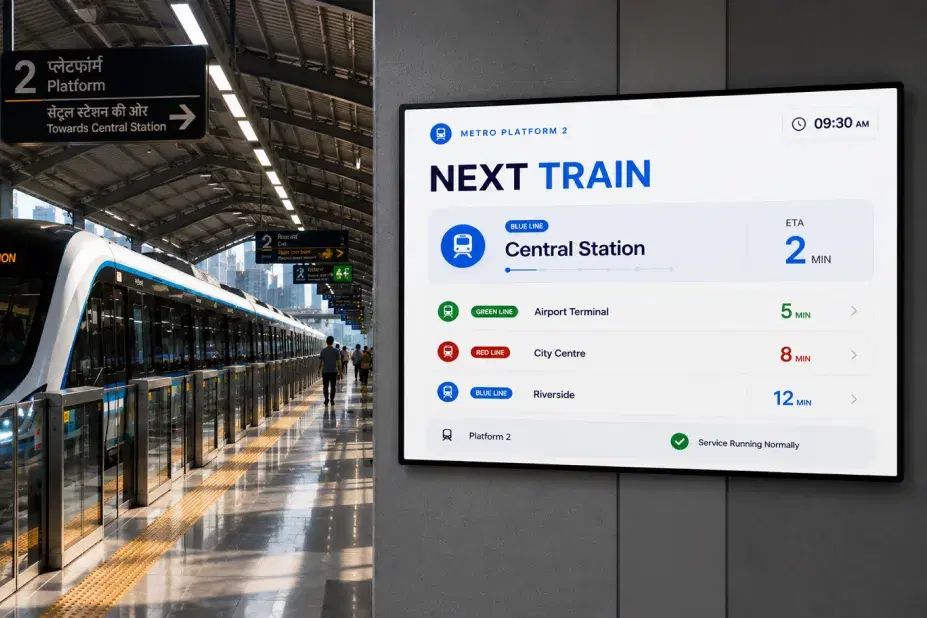
PIDS Solutions
Full Passenger Information Display System solution
Explore →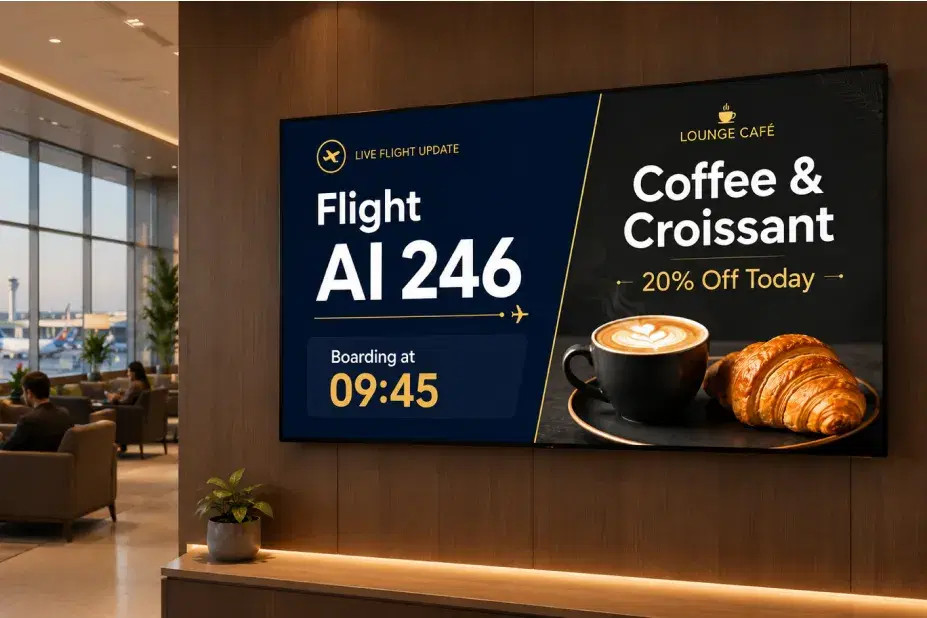
Flight Information Display System (FIDS)
Real-time gate and departure displays
Explore →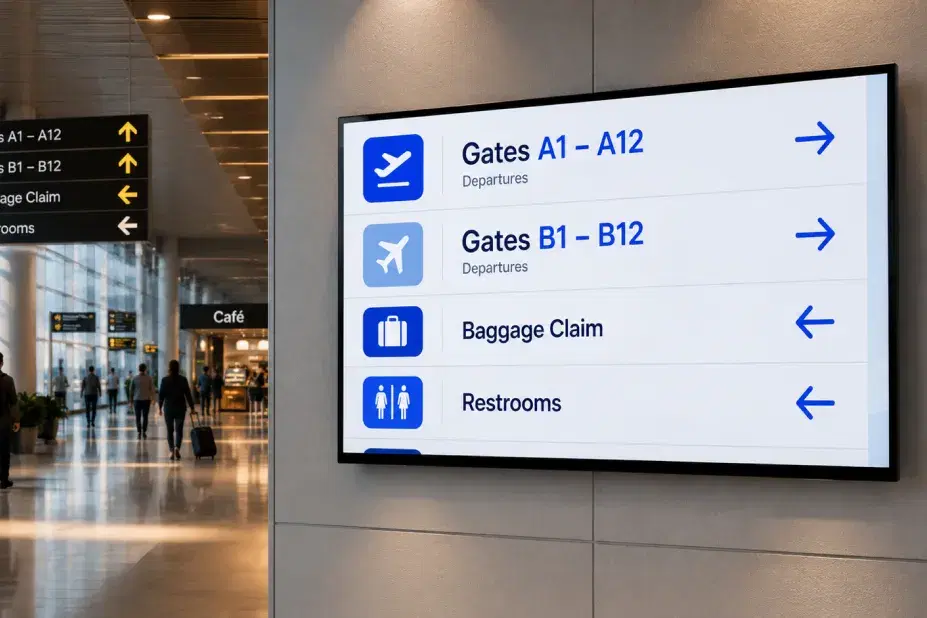
Wayfinding Signage
Interactive wayfinding and navigation displays
Explore →Frequently Asked Questions
Related Resources
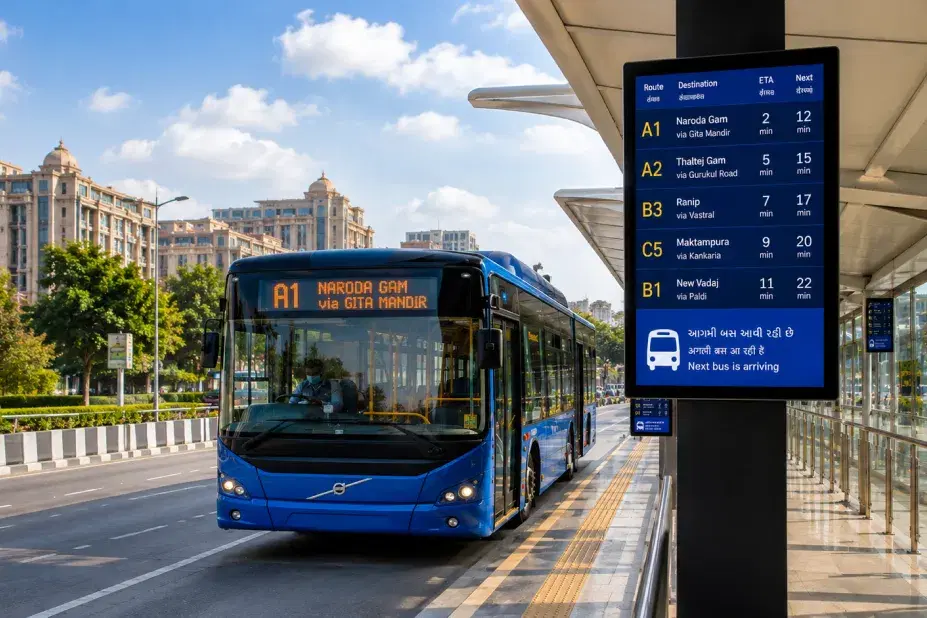
NEC Intelligent Passenger Information System Case Study
BRTS deployment: 150 stations, AVLS integration, government award
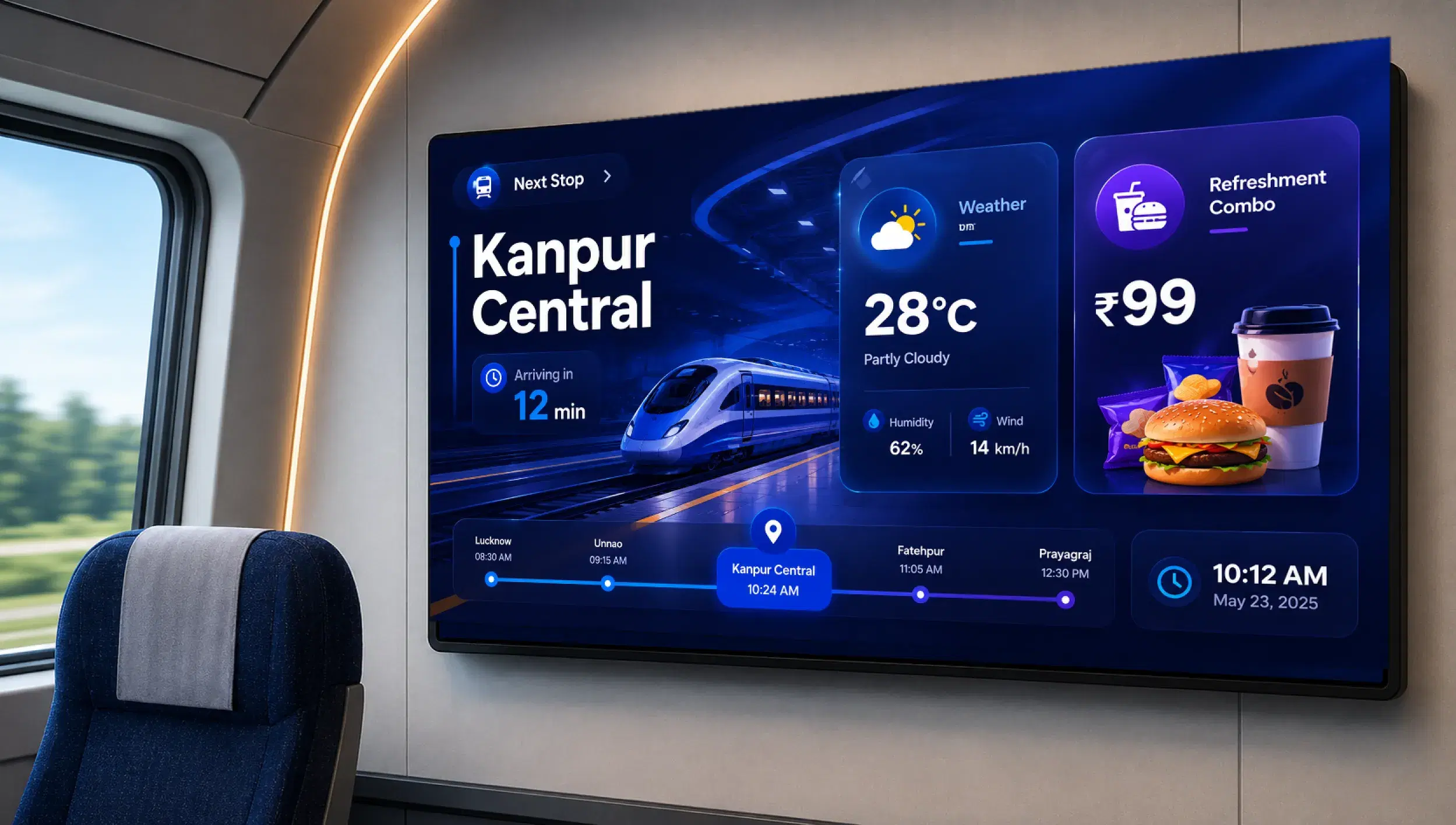
Train Advertising Case Study
Adjacent transit vertical proof point for readers evaluating transit operator ROI
Transportation Digital Signage
All transportation digital signage solutions — parent hub