
How NEC built an intelligent passenger information system for 150 BRTS bus stops
150 digital screens across two Indian cities. Real-time bus arrival data delivered in under 2 seconds, in three languages, from a single cloud platform.
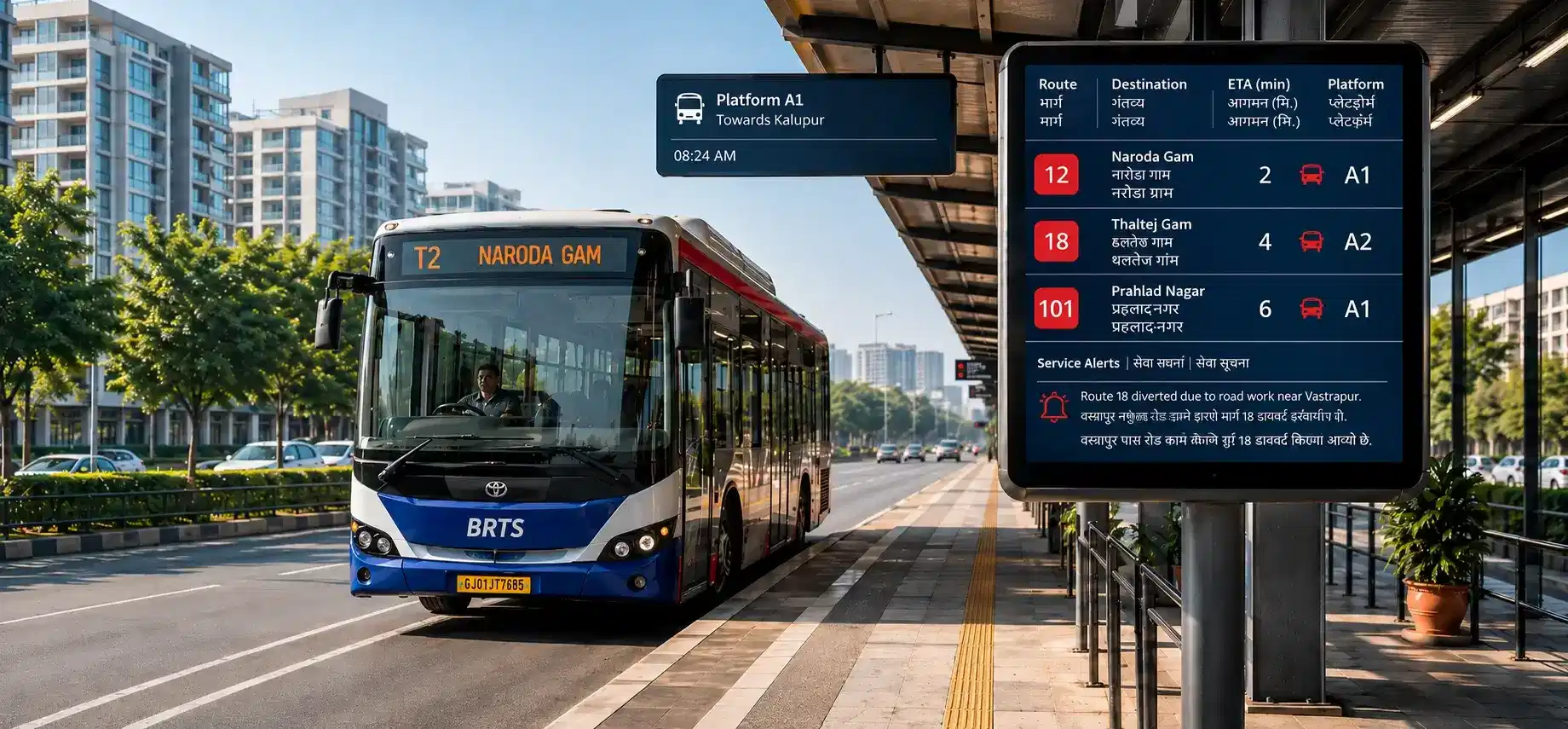
NEC Corporation deployed Pickcel's cloud-based digital signage platform across 150 bus stops in two Indian cities (Ahmedabad, Gujarat and Hubli-Dharwad, Karnataka) as part of an Intelligent Passenger Information System for Bus Rapid Transit networks. The core challenge was connecting real-time bus location data from NEC's Automatic Vehicle Location System (AVLS) to passenger-facing displays with sub-2-second latency, across two BRTS corridors serving linguistically diverse commuter populations. Pickcel delivered AVLS integration with a maximum 2-second latency, remote content management across the full 150-screen network, and trilingual content scheduling in the regional language, Hindi, and English, managed from a single cloud CMS. The Hubli-Dharwad BRTS, part of this deployment, was recognised as India's “Best Urban Mass Transit Project” by the Ministry of Housing and Urban Affairs, Government of India.
digital signages
2-second maximum
regional language, Hindi, and English on every screen
Industry
Smart Transit / Bus Rapid Transit
Client
NEC Corporation (Fortune Global 500, #450, 2020)
Locations
Ahmedabad BRTS (Gujarat) + Hubli-Dharwad BRTS (Karnataka)
Recognition
“Best Urban Mass Transit Project” — Ministry of Housing and Urban Affairs, GOI
Passenger information at scale, across two cities
Three problems had to be solved at once — with no room for latency, language gaps, or field trips.
Sub-2-second real-time data
NEC needed a display system that could translate live vehicle tracking data into legible, accurate passenger information with near-zero delay. The Automatic Vehicle Location System tracked bus positions across both BRTS corridors continuously, but propagating that data to 150 bus stop screens in two separate cities, each with its own infrastructure configuration, required an integration layer capable of receiving, processing, and distributing position updates within seconds of each AVLS refresh. Any meaningful lag between a vehicle's GPS update and the passenger-facing arrival board would undermine commuter trust in the system.
Three languages on every screen
The two BRTS corridors serve linguistically distinct commuter populations. Ahmedabad's riders span Gujarati, Hindi, and English speakers; Hubli-Dharwad's commuters include Kannada speakers alongside Hindi and English users. A single-language display would leave a substantial portion of each network's daily ridership unable to read the boards reliably. NEC required that all content, including arrival data, emergency messages, and public notifications, appear in three languages simultaneously on every screen, without requiring separate content feeds or duplicated scheduling workflows for each language tier.
Centralised remote administration
Managing 150 screens across two geographically dispersed cities introduced an operational constraint that matched the technical one. Physical site visits for content updates or fault resolution across both BRTS corridors were neither practical nor cost-effective at that scale. NEC needed centralised remote administration: the ability to configure screens, monitor system health in real time, and resolve faults without despatching a technician to an individual bus stop.
“Any meaningful lag between a vehicle's GPS update and the passenger-facing arrival board would undermine commuter trust in the system.”
AVLS-connected digital signage with remote administration
NEC selected Pickcel's cloud-based digital signage platform — used by 9,000+ businesses across 70+ countries, certified ISO 27001 and SOC 2 Type II — connecting directly to NEC's AVLS so each display reflects live vehicle position with a maximum 2-second latency.
Live bus arrival integration
The AVLS integration mapped incoming vehicle location data to the correct display zones for each stop across both networks. Screens showed live arrival and departure times, route numbers, bus identifiers and destinations, updated continuously — the 2-second maximum latency held across all 150 screens, even at peak commuter throughput.
Trilingual content display
Each display ran a multi-zone layout: one zone for live AVLS data, a second for brand videos, public-service announcements and emergency notifications. Both supported trilingual scheduling — the regional language (Kannada or Gujarati), Hindi and English in the same frame, managed centrally with no separate feeds per language.
Remote administration
A single centralised dashboard covered configuration, scheduling, health monitoring, maintenance alerts and remote troubleshooting across both cities. NEC could fix a fault, push content, or broadcast an emergency notice to all 150 screens from one console — no site visit required for routine administration.
Award-winning transit infrastructure
“Best Urban Mass Transit Project”
Ministry of Housing and Urban Affairs, Government of India — awarded to the Hubli-Dharwad BRTS, with Pickcel's real-time display infrastructure as a core operational component.
The Ahmedabad BRTS became one of India's most successful BRTS networks following deployment, with the passenger information system as core infrastructure.
Passengers at every stop gained real-time arrival and departure data in their preferred language, replacing absent or static schedules with live AVLS-connected displays.
NEC gained centralised control over a 150-screen cross-city network without the staffing overhead of physical administration — emergency and service-change notices broadcast to both cities simultaneously, seconds after the decision to send.
Frequently asked questions
What is a passenger information display system (PIDS) for bus rapid transit?+
A passenger information display system for bus rapid transit is a network of digital screens at bus stops that shows real-time arrival times, route numbers, destinations and service alerts to waiting commuters — connected to the operator's vehicle tracking system and capable of displaying multilingual content and emergency notifications.
How does Pickcel integrate with an Automatic Vehicle Location System (AVLS) to display real-time bus arrivals?+
Pickcel connects to the AVLS feed and processes vehicle location data to calculate bus ETAs, pushing updates to passenger displays automatically as new positions are received. For the NEC deployment, this achieved a maximum 2-second data latency across all 150 bus stop screens.
What was the maximum latency in NEC's real-time bus information display system?+
The maximum data latency was 2 seconds. When a bus position changed in the AVLS, screens at the corresponding bus stops reflected the updated arrival time within 2 seconds, keeping information current across the entire 150-screen network.
Can Pickcel display content in multiple languages simultaneously on the same screen?+
Yes. Pickcel supports multilingual scheduling within a multi-zone screen layout. For NEC's BRTS deployment, each display showed content in three languages simultaneously: the regional language (Kannada or Gujarati), Hindi and English, managed from a single cloud CMS.
What types of content can be shown on bus stop digital signage besides arrival times?+
Bus stop displays managed by Pickcel can carry scheduled brand videos, public service announcements, emergency notifications and commercial advertising. For NEC's BRTS network, auxiliary content ran in a dedicated zone alongside live AVLS data within a multi-zone screen layout.
What recognition did the Hubli-Dharwad BRTS receive for its passenger information system?+
The Hubli-Dharwad BRTS was recognised as India's "Best Urban Mass Transit Project" by the Ministry of Housing and Urban Affairs, Government of India. Pickcel's Intelligent Passenger Information System formed part of the integrated transit technology network that received this recognition.
See how others use Pickcel
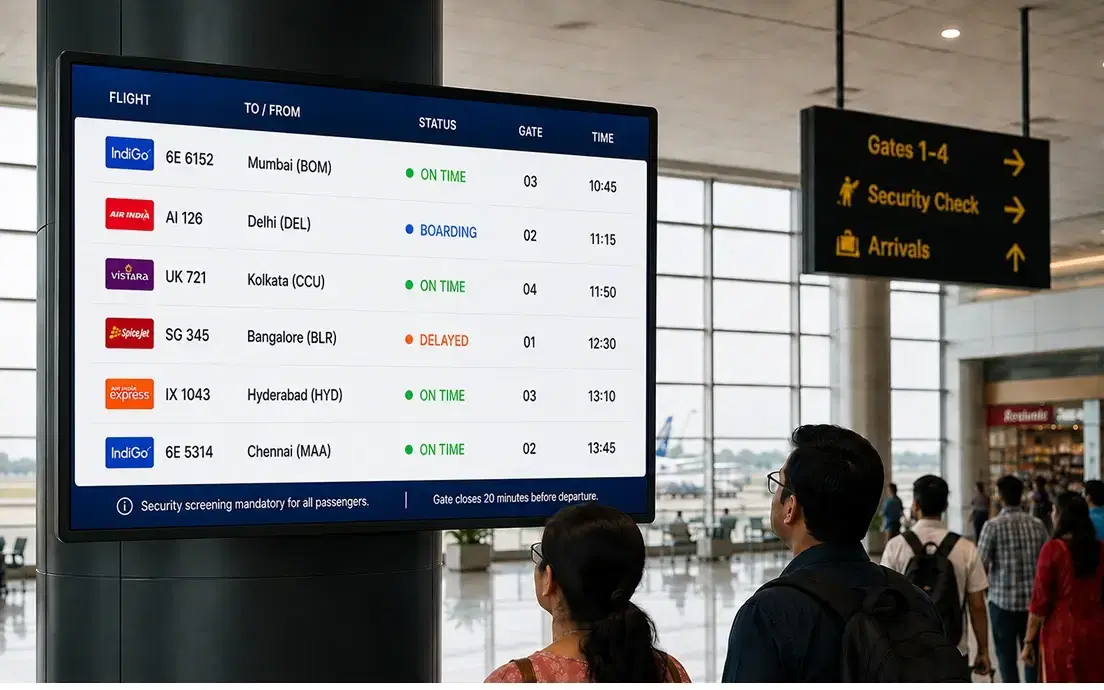
Passenger information displays at Varanasi Airport
Real-time flight data delivered across airport terminals — a second Indian public-transit deployment.
Read case study →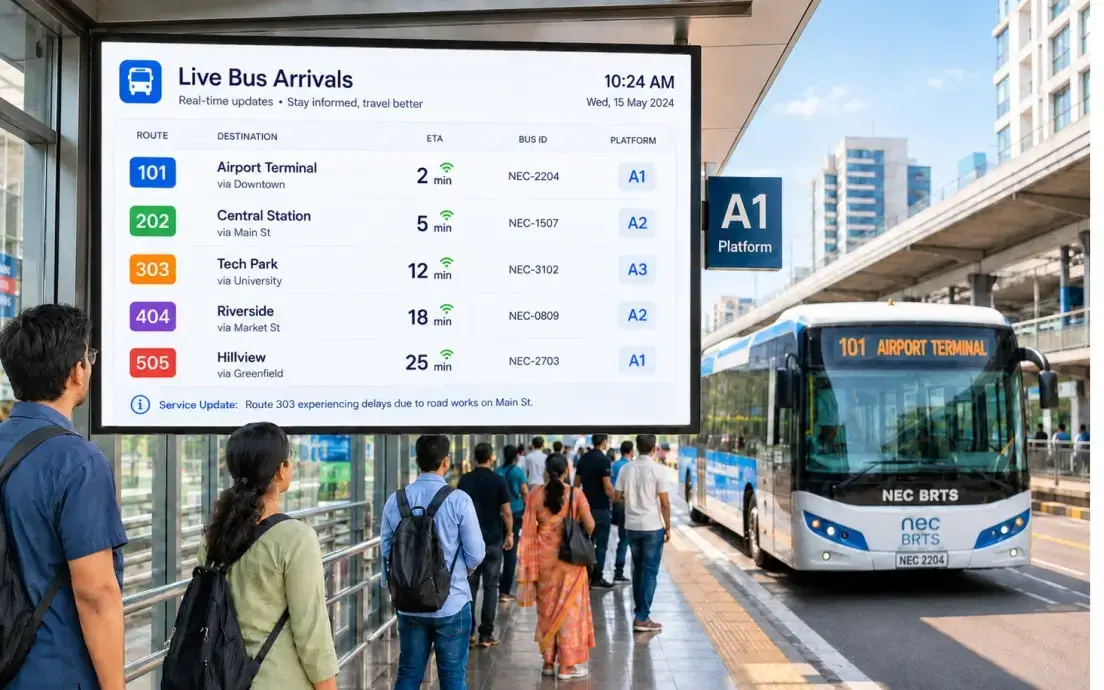
Transportation digital signage software
Platform capabilities for bus stops, airports, railways and smart-city transit networks.
Explore more →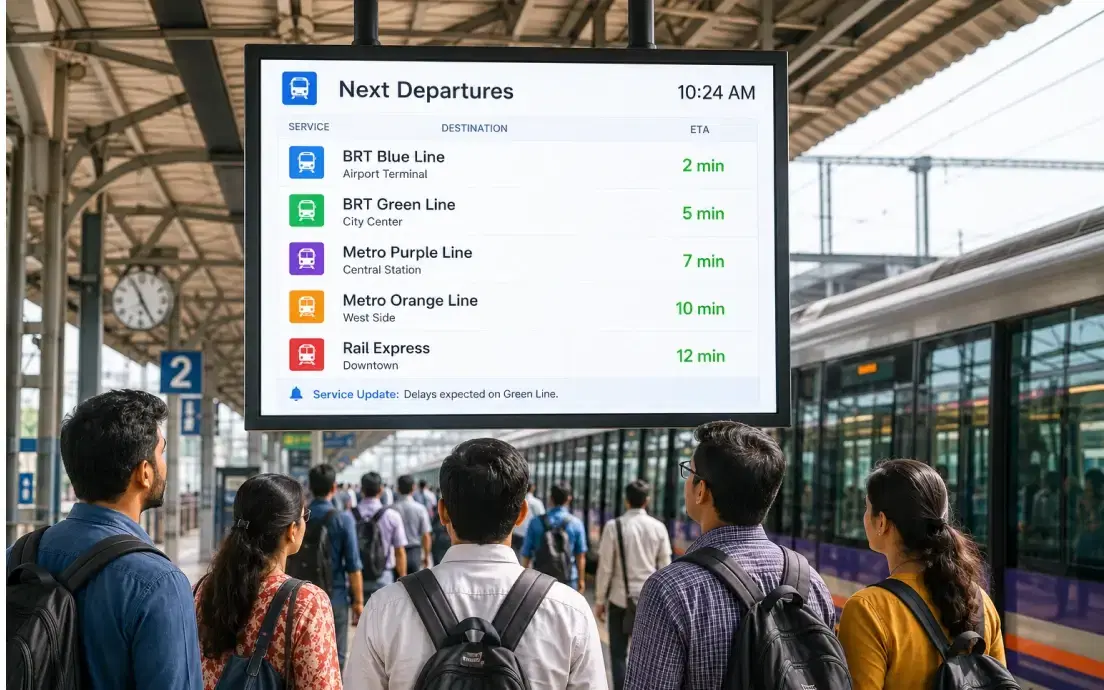
Passenger information display system software
AVLS-connected real-time displays for bus rapid transit, metro and rail networks.
Learn more →Pickcel is a cloud-based digital signage software platform trusted by 9,000+ businesses across 70+ countries, managing 150,000+ screens. Certified ISO 27001 and SOC 2 Type II. In transit, Pickcel powers deployments including the NEC Corporation BRTS Intelligent Passenger Information System across Ahmedabad and Hubli-Dharwad, and airport passenger information at Varanasi Airport.