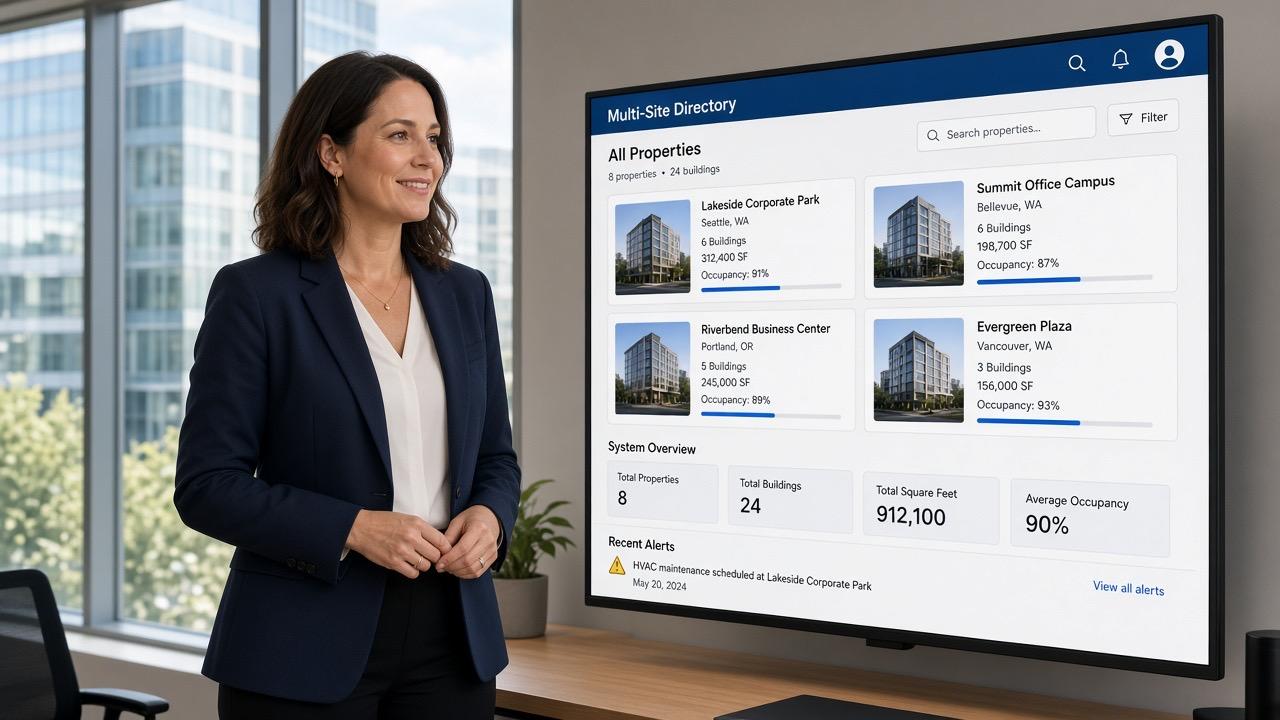
Pickcel assigns update ownership explicitly, at the account level, so this is settled before go-live rather than debated after the first stale listing appears. Directory software fails in practice when nobody knows who owns the update, not when the technology is missing a feature.
A single front-desk employee or building operations lead can own every listing for a building, updating names, suites, and categories as tenants move. For properties that prefer a lighter-touch model, individual tenants can be granted edit rights to their own listing only, which removes the update from building staff entirely for routine changes like a new logo or a rebrand.
Multi-building rollouts follow a template model. A property team standardizes a directory layout once, then pushes that layout to every new building added to the account. A twenty-building portfolio onboarding for the first time typically has its first directory screen live within a day of account setup, with the remaining buildings following at whatever pace hardware installation allows, not software configuration. This template pattern shows up often in corporate lobby deployments, where portfolio teams standardize the office building directory once and scale it to every new site added to the account.
Ownership does not require a technical background. Every action available to a front-desk user or tenant contact happens inside a standard web form: type a name, pick a suite from a dropdown, upload a logo. There are no file formats to learn and no separate software to install on the lobby device.