
Point of Sale (POS) for Retail Digital Signage
Retail operations and IT teams get pricing, promotions, and checkout-lane messaging that update automatically from POS transaction data, so a screen never shows a price the register won't honor. Pickcel's digital signage platform connects to your POS through a documented integration method, not a vague promise.

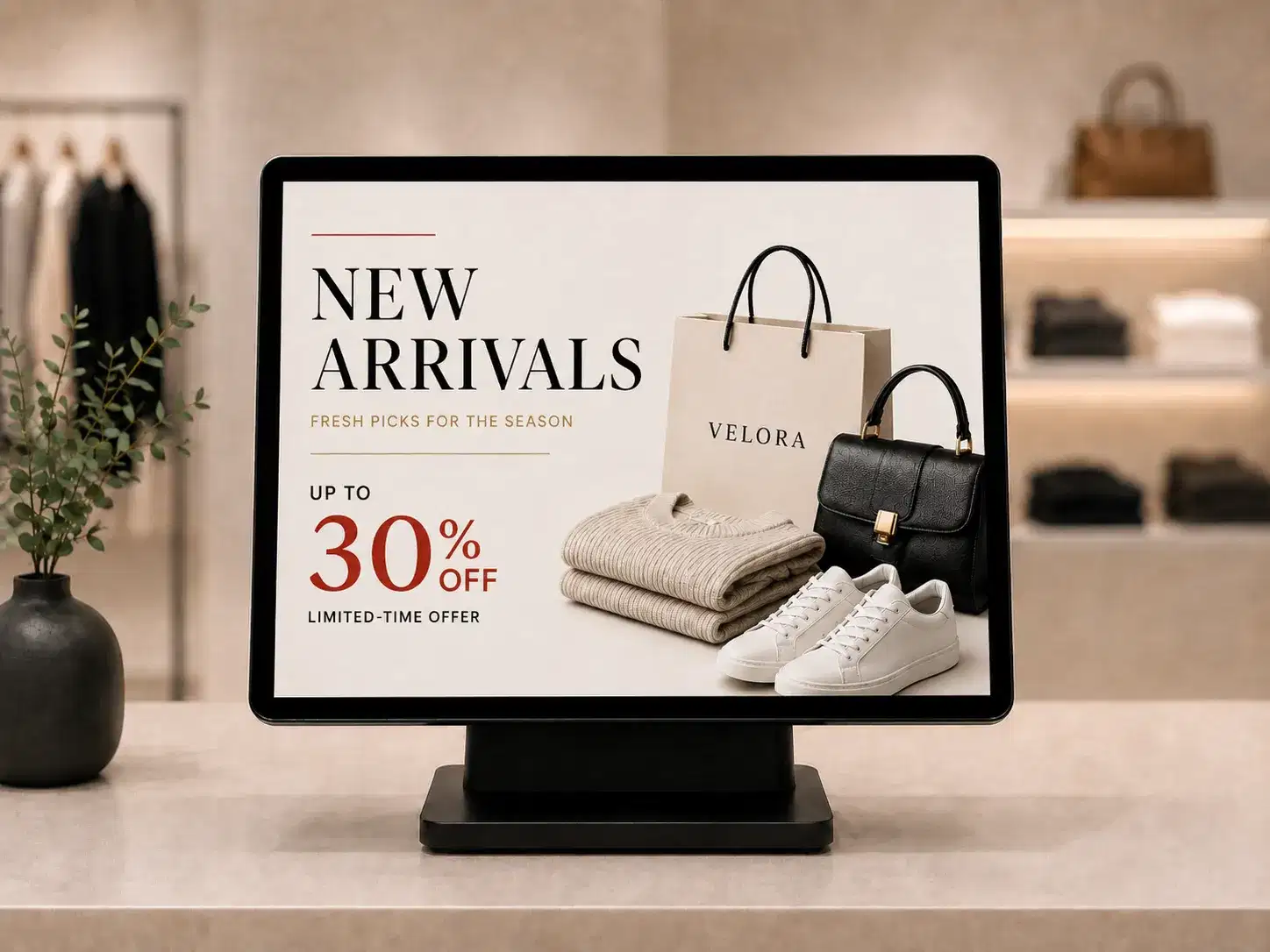
Built for retail operations and IT teams running POS-linked pricing, inventory sync, and checkout-lane displays.





Pricing and promotions turned dynamic
Pickcel links screen content directly to POS pricing data, so when an item's price or promotion status changes at the register, the same change reaches every connected screen without a staff member re-uploading a slide. A price on screen that doesn't match the price at checkout costs a sale, or worse, a customer's trust in every other display in the store.
Inventory status drives the same feed. When a SKU sells out or drops below a threshold set in the POS, its promotional slide can be pulled from rotation automatically instead of continuing to advertise stock that no longer exists on the shelf. A grocery chain running a weekend discount on a produce item can end that promotion the moment inventory clears, rather than relying on a manager to remember to swap the slide before opening.
Time-based logic runs on the same connection. A QSR counter can shift its digital menu board to lunch specials at 11 a.m. and back to breakfast items the next morning, both timed off the same POS data feed that already tracks daypart transitions for reporting. An apparel retailer clearing end-of-season stock gets the same benefit in reverse: as a markdown schedule steps a jacket's price down over three weeks in the POS, the in-store screen reflects each step the moment it takes effect, instead of a floor associate manually updating a price card on a fixed day each week and occasionally missing one.
Seconds
webhook push to screens where the POS platform supports it
~60s
polling fallback where the POS only exposes file-based access
Once
setup per POS platform, not once per store
Integration mechanics
During setup, your POS data schema (SKUs, prices, promotion flags, inventory counts) gets mapped to a Pickcel content feed by Pickcel's implementation team. Where the POS platform supports webhooks, updates push to connected screens within seconds of the transaction or price change. Where a POS system only exposes file-based or polling access, Pickcel falls back to scheduled polling, typically every 60 seconds, so screens still stay close to real time without needing a webhook-capable POS.
POS system
SKUs, prices, promotion flags, inventory counts
Pickcel content feed
schema mapped once per POS platform; webhook push where supported, ~60s polling fallback where it isn't
Connected screens
shelf-edge display, checkout-lane screen, menu board
Shopper at the register
sees the same price the POS will charge

Setup happens once per POS platform, not once per store.
A multi-location retailer running the same POS system across every site configures the data mapping a single time; each new store location then connects to that same integration, sending its own store-specific pricing and inventory data through the same feed rather than requiring a fresh setup per site.
A retailer running two different POS systems across different store formats (a legacy system in older stores, a newer cloud POS in recent openings) can run both integrations side by side into the same Pickcel dashboard.
Data moves over an encrypted API connection, and Pickcel's infrastructure is SOC 2 Type II and ISO 27001 certified, the same standard covering every other data flow on the platform.
That matters to an IT manager approving a new data connection between the POS system and a public-facing display network, not just to the marketing team choosing what appears on screen.
More ways a POS connection supports the store
Checkout upsell triggers
So you can Offers fire off the live transaction, not a scheduled slide
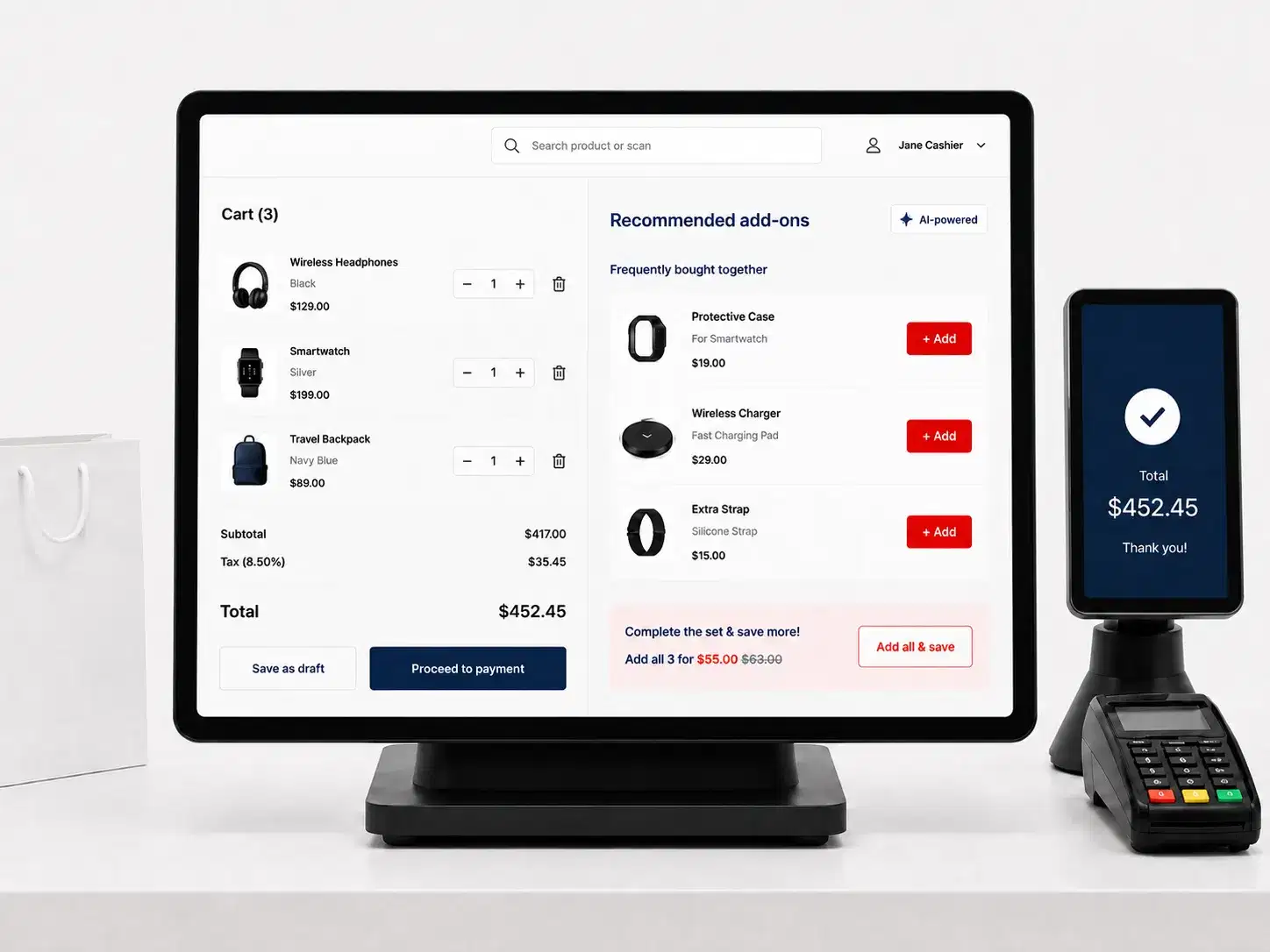
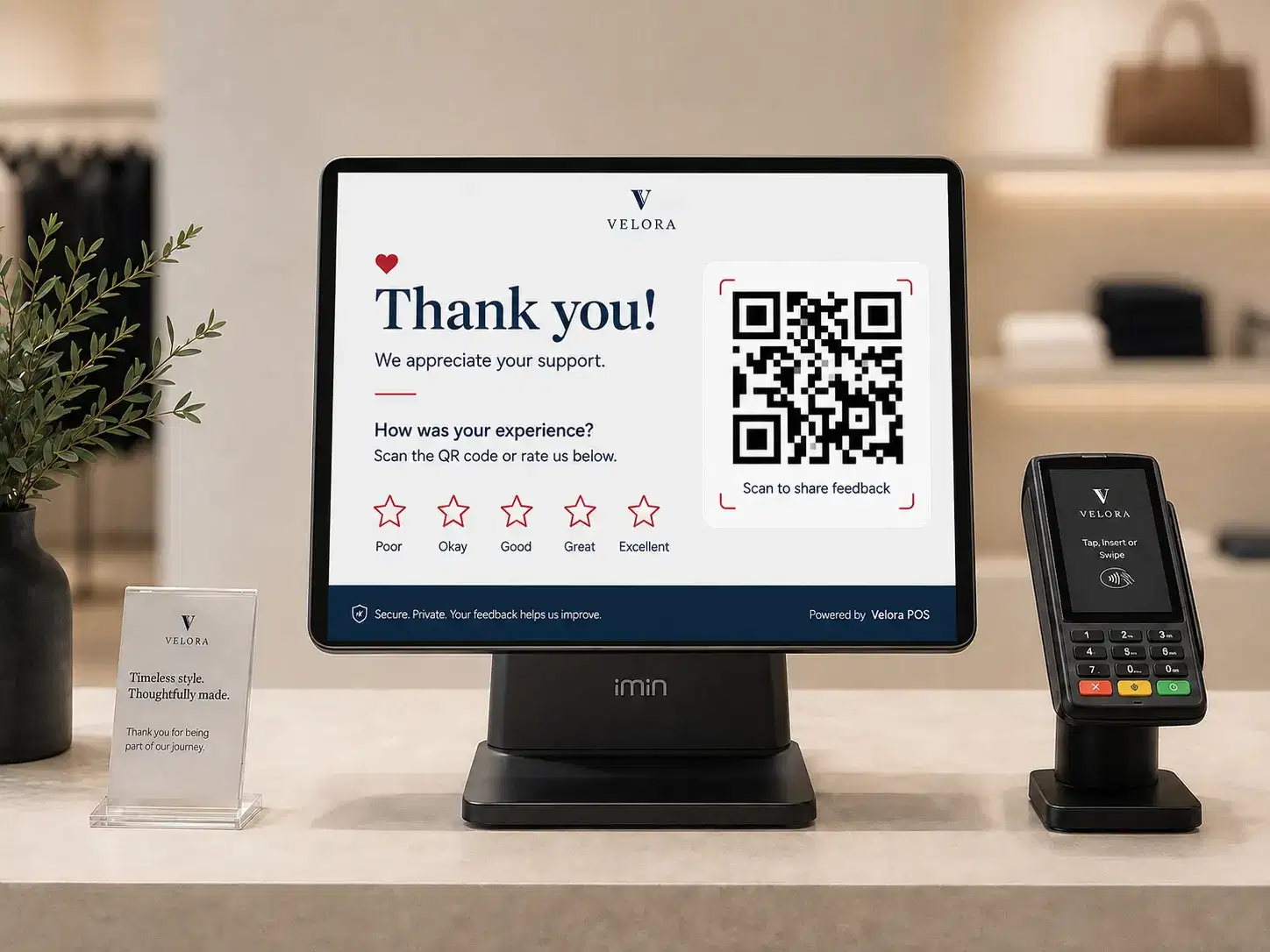
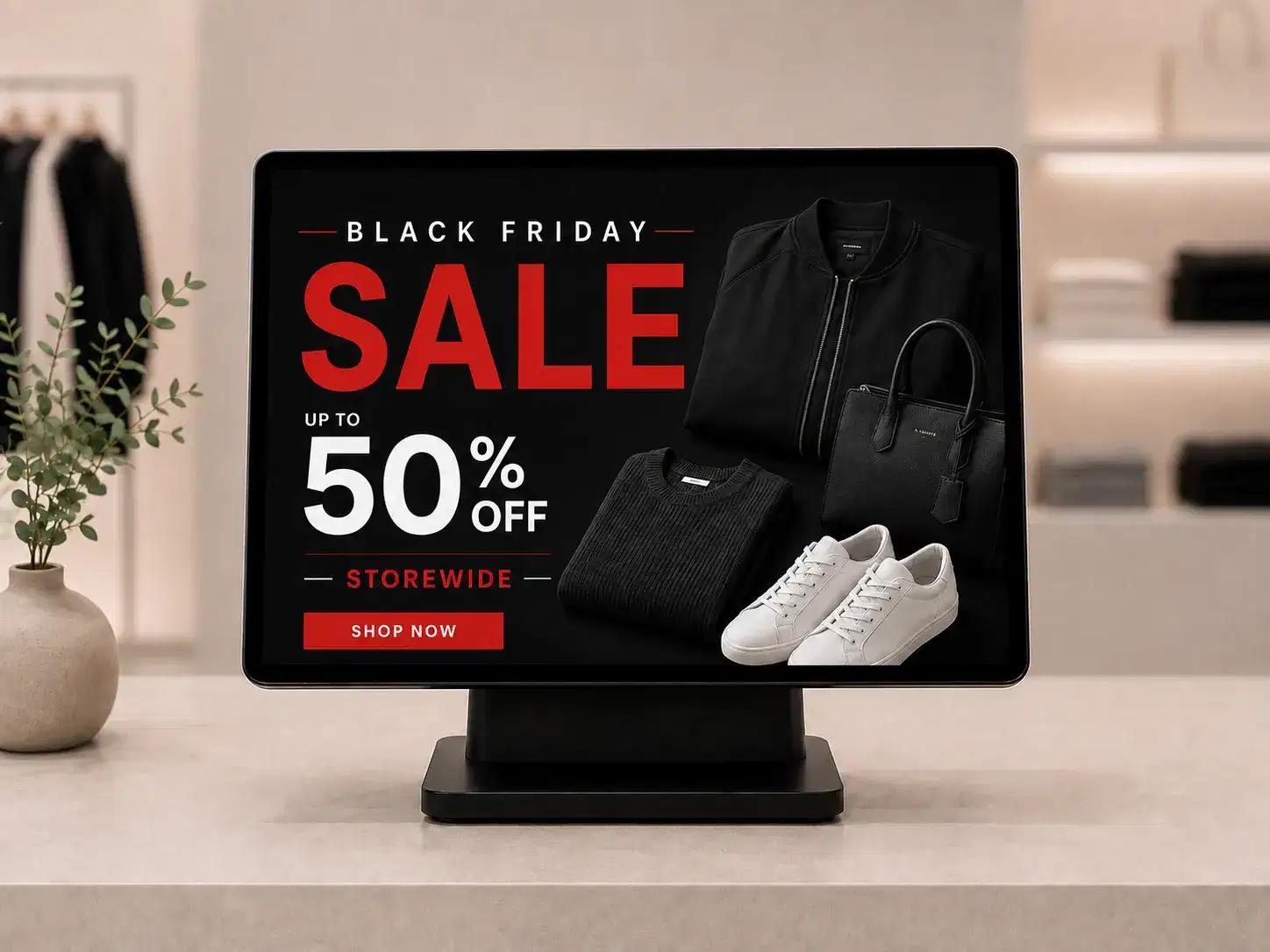
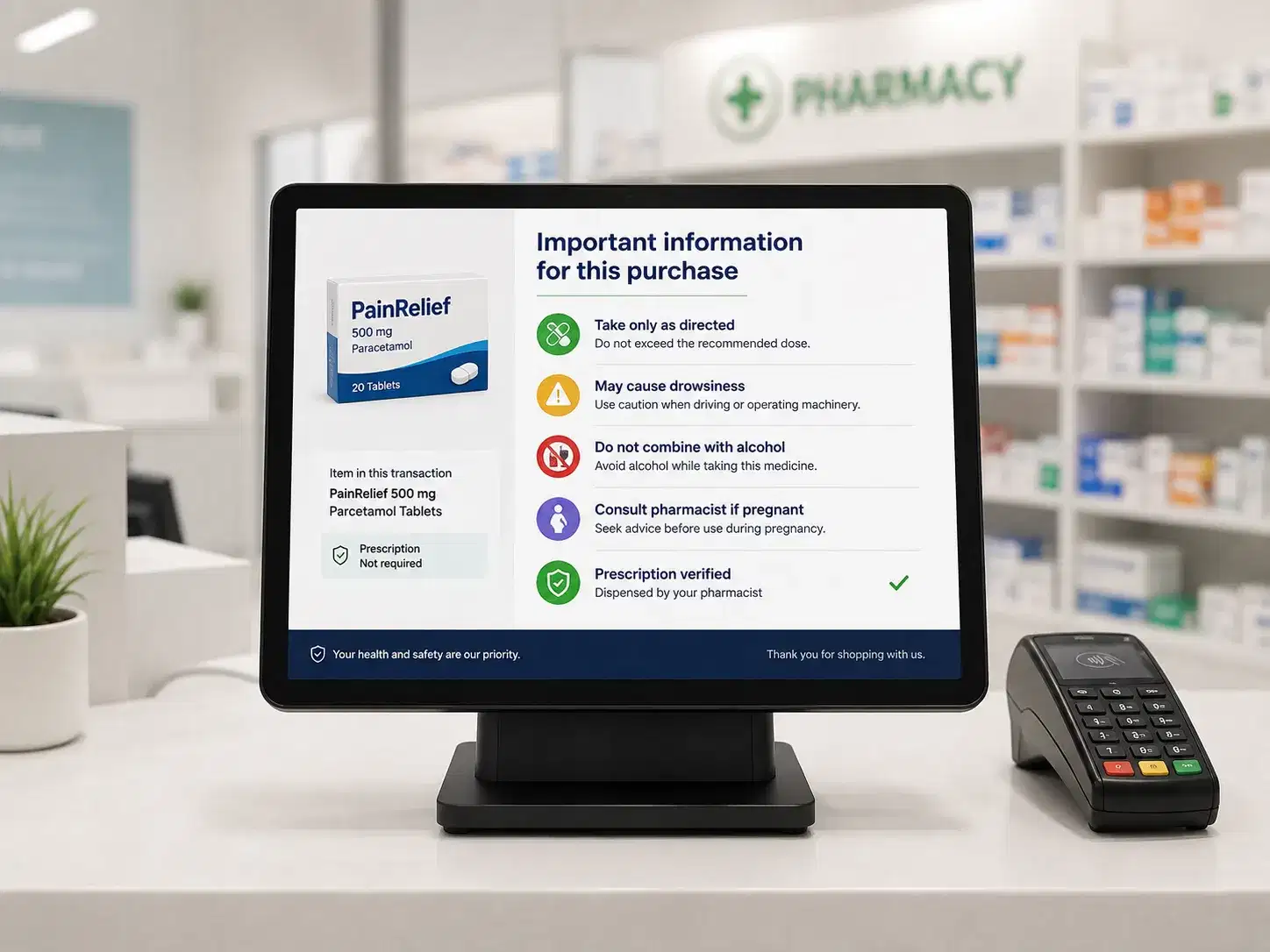
How POS integration helps your retail business
Beyond pricing, upsells, and compliance, a POS connection supports a handful of other store-floor use cases worth naming.
Social media integration
Product-related social content, such as customer posts tagging a specific item, can run alongside that item's POS-driven pricing on the same screen, giving a shopper more than a price to look at while deciding.

Interactive kiosks
A customer can browse, check pricing, and in some deployments complete a purchase directly at an interactive kiosk pulling live data from the same POS feed that updates every other screen in the store.

Queue management
In grocery stores or bank branches, a POS-linked screen can show queue status or estimated wait time, which comes from the same transaction data used for pricing, not a separate system a store has to maintain on its own.

Loyalty program integration
When a customer checks out or scans a loyalty card, the nearest screen can display their program status or an available reward, tied to the account information the POS system already holds at that point in the transaction.

Who needs Pickcel's retail solutions?
Any retail format running a POS system can put this to use, and the specifics shift by store type. A grocery or supermarket chain uses it most for inventory-linked pricing and queue status. A pharmacy uses it for compliance content tied to a transaction. A fashion or apparel retailer leans on checkout upsells and loyalty-tied screens at the register. An electronics store or a shopping mall operator typically combines several of these at once, running pricing sync on the sales floor alongside wayfinding or directory screens elsewhere in the property.Store size changes what a rollout looks like more than store type does. A single-location retailer typically connects one POS system to one Pickcel account and is live within the same onboarding window as any other new deployment. A multi-site chain adds each store's POS feed into the same central account as that store opens or converts, so a regional operations manager sees pricing and promotion status across every connected location without visiting each store's back office.
Related Case Studies
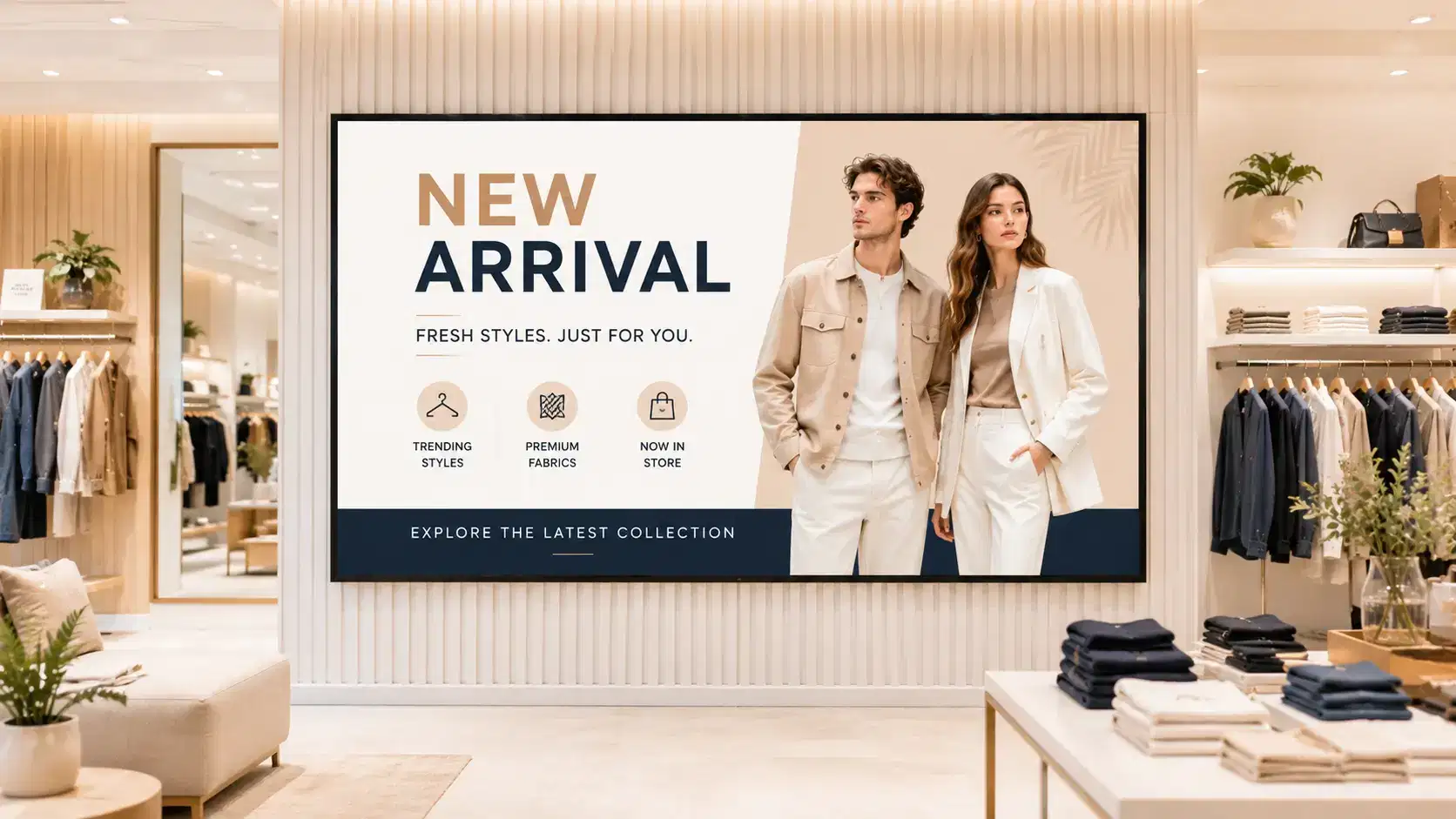
Retail digital signage solutions
Pickcel's retail digital signage solutions for in-store screens, pricing, and promotions.
Explore retail →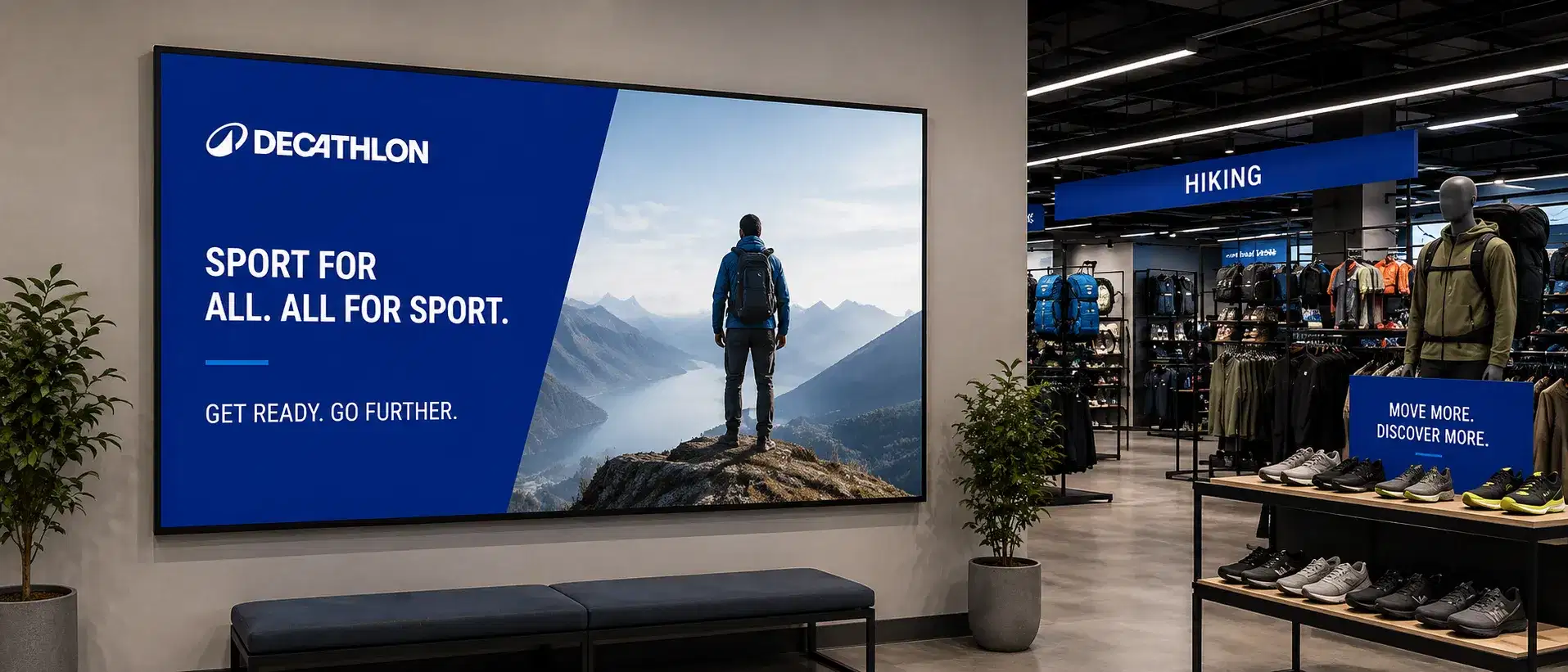
Decathlon
Decathlon retail digital signage case study.
Read case study →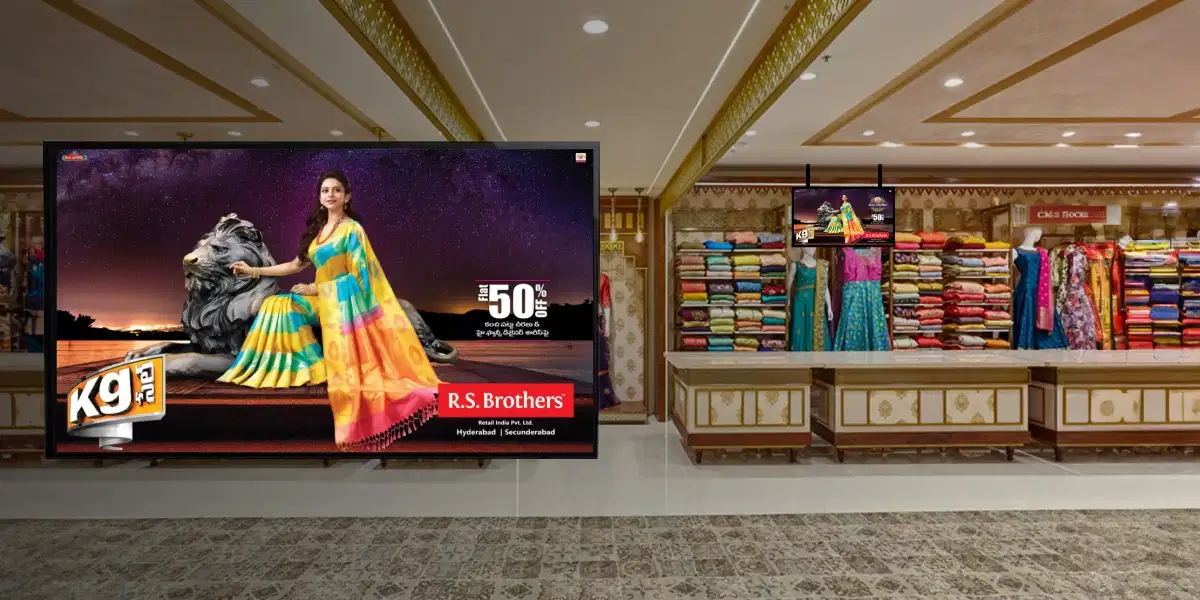
RS Brothers
RS Brothers retail digital signage case study.
Read case study →Retail signage playbook
Get the retail signage playbook.
Get the playbook →